
Shipping Industry Alarmed by Trump's Strait of Hormuz Plan

Trump's Project Freedom aims to guide ships through Strait of Hormuz amid Iran tensions. Shipping executives express concern over operation details and Iran's warnings.
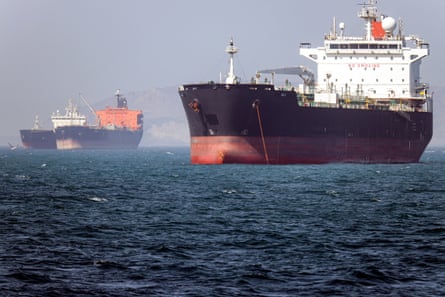
The shipping industry is bracing for uncertainty as the Trump administration moves forward with an ambitious new initiative to navigate one of the world's most strategically critical waterways. The Strait of Hormuz has become a flashpoint in the escalating regional conflict, with hundreds of commercial vessels finding themselves stranded in the Gulf since hostilities intensified between the United States and Iran.
On Sunday evening, President Donald Trump unveiled what he termed "Project Freedom" through his social media platform, framing the controversial operation as a humanitarian effort to assist trapped maritime crews. The announcement marked a significant escalation in American military involvement in the region, though Trump provided minimal operational details about how the scheme would actually function or what resources would be deployed to execute it effectively.
Shipping company executives and industry leaders have responded to the announcement with palpable nervousness, citing concerns about the vague parameters of the operation and the potential for military confrontation. The maritime industry depends heavily on predictable, stable shipping routes, and any disruption—particularly one involving military intervention—threatens to destabilize global trade flows and insurance arrangements for vessels operating in the region.
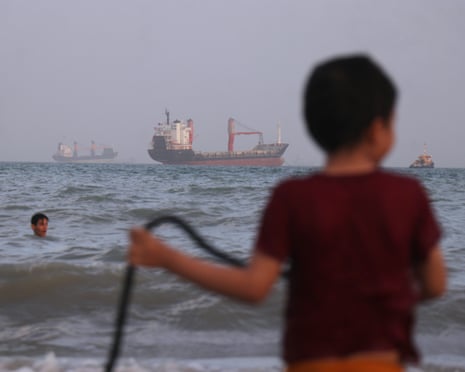
Iran's government wasted no time in responding to the American initiative with stern warnings. Tehran's military and political leadership made unequivocal statements that any armed forces attempting to navigate through the Strait of Hormuz without explicit coordination with Iranian authorities would face immediate military consequences. The Iranian position represents a direct challenge to the Trump administration's unilateral approach to resolving the shipping crisis.
The geopolitical complexity of the situation cannot be overstated. The Strait of Hormuz remains one of the world's most critical chokepoints for global energy and trade, with approximately one-third of all maritime petroleum traffic passing through its narrow waters annually. Any disruption to shipping through the strait has immediate and far-reaching consequences for international energy markets, manufacturing supply chains, and economic stability worldwide.
Trump's announcement provides few concrete answers to the pressing questions facing the shipping industry. Operators need to understand the scope of military protection being offered, the rules of engagement that would govern American naval forces in the region, and crucially, what guarantees could be provided regarding vessel safety. The lack of specificity in the presidential announcement has only amplified existing anxieties within maritime circles.

Shipping executives have expressed deep frustration about being caught between two competing military forces with no clear pathway to safe passage. Many companies have already rerouted vessels around the Cape of Good Hope at the southern tip of Africa, adding weeks to journey times and significantly increasing operational costs. This alternative routing, while ensuring safety, represents a substantial drain on industry profitability and global supply chain efficiency.
The humanitarian framing that Trump applied to Project Freedom reflects an attempt to build international support for the initiative, positioning it as a rescue operation rather than a purely military intervention. However, shipping industry observers remain unconvinced that the operation prioritizes crew welfare over broader strategic military objectives, particularly given the Trump administration's well-documented confrontational approach toward Iran policy.
Insurance underwriters and maritime legal experts are grappling with questions about liability and coverage in the event of incidents involving American military escort operations. Standard maritime insurance policies contain complex provisions regarding war zones and military involvement, and the ambiguous nature of Project Freedom creates significant uncertainty about whether vessels would maintain full insurance coverage during transit.
The broader context of Iran-US tensions cannot be ignored when evaluating this initiative. Relations between the two nations have deteriorated dramatically over recent months, with military posturing and rhetorical escalation becoming increasingly common. Against this backdrop, the introduction of an American military operation explicitly designed to circumvent Iranian control over the strait represents a significant provocative step.
International maritime organizations have called for diplomatic solutions that would allow all nations to participate in ensuring safe passage through the Strait of Hormuz. The International Maritime Organization and various shipping associations have emphasized that sustainable resolution requires coordination among regional powers, not unilateral military action that could further inflame tensions.
The financial implications of sustained shipping disruptions in the region extend far beyond individual shipping companies. Global supply chains for everything from oil and natural gas to manufactured goods depend on reliable maritime transport through the Persian Gulf. Prolonged instability threatens inflationary pressures on consumer prices and could significantly impact economic growth projections for the coming fiscal year.
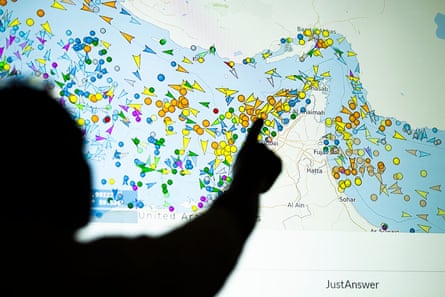
Shipping industry analysts predict that until concrete operational details emerge and clarifications are provided regarding Iranian-American coordination mechanisms, many companies will continue to avoid the Strait of Hormuz entirely. This cautious approach, while ensuring crew safety, perpetuates the fundamental problem that Project Freedom was ostensibly designed to solve.
The Trump administration has indicated that further announcements regarding Project Freedom's operational framework will follow in coming weeks. Industry stakeholders are eagerly awaiting these clarifications, hoping that additional details will provide sufficient confidence for shipping companies to resume normal transit patterns through the critical waterway. Until then, the maritime sector remains in a state of uneasy waiting, balancing operational pressures against very real safety concerns in an increasingly volatile region.
Source: The Guardian


