
Supreme Court Restricts Race Factor in Electoral Maps

US Supreme Court limits the use of race when drawing electoral district maps, making it harder to challenge maps that dilute minority voting power.
In a significant ruling that reshapes the legal landscape surrounding electoral redistricting, the US Supreme Court has issued a decision that substantially limits the extent to which race can be considered when drawing legislative district boundaries. This consequential ruling will fundamentally alter the ability of civil rights advocates and minority groups to successfully challenge electoral maps that many argue effectively dilute the voting power of racial minorities across the country.
The Supreme Court decision represents a substantial shift in how courts will evaluate redistricting practices going forward. Previously, legal challenges based on racial considerations had proven more viable in certain circumstances, allowing plaintiffs to argue that mapmakers had improperly prioritized race over other legitimate redistricting factors. Now, with this restrictive interpretation, demonstrating that race was the predominant factor in map creation has become considerably more difficult, creating a higher legal burden for those seeking to contest potentially discriminatory electoral boundaries.
Legal experts specializing in voting rights have expressed concern about the practical implications of this ruling. The decision effectively narrows the pathway for voting rights advocates to challenge maps that they contend systematically disadvantage minority communities. Under previous legal standards, evidence that race played a significant role in redistricting decisions could support successful legal challenges. This ruling, however, imposes stricter standards of proof and requires demonstrating that race was not merely a consideration but rather the predominant factor in the mapmaking process.
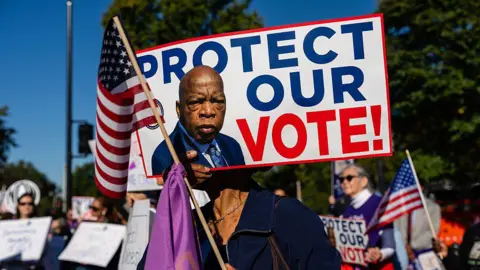
The implications of this redistricting decision extend far beyond the courtroom. Electoral maps directly determine the political representation that communities receive, influencing everything from local school board decisions to representation in Congress. When maps are drawn in ways that dilute minority voting strength, it can substantially impact the ability of those communities to elect representatives of their choice, affecting policy priorities and resource allocation for generations. The Supreme Court's action effectively makes it substantially more difficult to remedy such situations through legal intervention.
Civil rights organizations and voting rights advocates have raised significant concerns about the decision's potential consequences for democratic representation. Many argue that the ruling will embolden mapmakers to employ increasingly sophisticated techniques for diluting minority voting power while remaining within the new legal parameters established by the Court. These sophisticated methods can include vote-splitting strategies, strategic placement of district boundaries, and other techniques that minimize the political influence of minority voters without explicitly referencing race in official justifications.
The broader context of electoral redistricting in America involves complex questions about how legislative districts should be drawn and what factors should be permissible or impermissible in the mapmaking process. While the Court's reasoning emphasizes the importance of avoiding excessive racial considerations in redistricting, critics contend that the ruling effectively ignores the ongoing reality of residential segregation and historical patterns of discrimination that continue to influence community composition and demographic distribution.
The legislative maps created following decennial census counts determine representation for the next ten years, making redistricting a critically important political process. State legislatures typically control this process, giving them substantial power to shape electoral outcomes and political representation. Throughout American history, this power has sometimes been exercised in ways designed to entrench political advantage or, in some cases, to diminish the political power of particular demographic groups based on race or ethnicity.
Under the previous legal framework, courts had greater flexibility in evaluating whether race had been improperly prioritized in redistricting decisions. The voting power of minority communities could be protected through legal challenges that highlighted racial considerations in mapmaking. This approach, while not perfect, provided an important mechanism for addressing what many consider discriminatory electoral practices. The Supreme Court's new interpretation substantially constrains this protective mechanism.
Legal scholars have debated whether the Court's approach adequately addresses the complexity of modern redistricting challenges. Some argue that in a context of residential segregation and ongoing demographic patterns shaped by historical discrimination, it may be nearly impossible to draw maps that don't implicitly consider race in some form. Others contend that the ruling appropriately constrains racial considerations and prevents courts from imposing particular outcomes based on racial demographics.
The practical impact of this Supreme Court ruling will likely become apparent in coming years as new redistricting cycles occur and as organizations attempt to challenge maps they believe dilute minority voting strength. The heightened legal standards established by this decision mean that successfully challenging such maps will require more definitive evidence of race-based decision making. This higher evidentiary burden could mean that maps that accomplish similar vote-dilution effects through more subtle means will prove more difficult to challenge successfully.
State legislatures will now operate under this new legal framework as they conduct redistricting activities. While some will appreciate the greater latitude to draw maps without extensive concern about racial considerations, voting rights advocates worry that this freedom will be exercised in ways harmful to minority communities. The coming years will reveal how legislatures utilize this expanded discretion and whether courts, under the new legal standards, can still meaningfully address what many consider discriminatory electoral practices.
The historical context of voting rights in America remains important for understanding the significance of this ruling. Decades of litigation and legislation have sought to prevent racial discrimination in voting, culminating in landmark legislation like the Voting Rights Act of 1965. This Supreme Court decision, however, represents a significant constraint on one important mechanism for enforcing voting rights protections in the modern era. The tension between colorblind principles and remedying historical discrimination remains one of the most contested issues in American constitutional law.
Looking forward, this ruling will shape debates about electoral justice and minority representation for years to come. Civil rights organizations, state legislatures, and courts will all navigate the new legal landscape established by this decision. Whether the ruling ultimately strengthens or weakens protections for minority voting rights will depend significantly on how these various actors respond and whether additional legal mechanisms or legislative protections can compensate for the constraints now placed on race-based redistricting challenges.
Source: BBC News


