
Switzerland Reveals Secret Mengele Files

Switzerland to declassify confidential documents about Josef Mengele, the Nazi doctor known as the 'Angel of Death,' ending decades of mystery about his alleged time in the country.
Switzerland has announced plans to open previously classified government files regarding Josef Mengele, the infamous Nazi physician known as the Angel of Death, marking a significant moment in the country's complicated relationship with World War II history. The decision to declassify these documents comes after mounting pressure from historians and victims' families seeking to understand what role Switzerland may have played in harboring one of the Nazi regime's most notorious war criminals during the chaotic post-war period.
For decades, persistent rumors have circulated that Mengele fled Europe after the collapse of the Third Reich and spent time seeking refuge in Switzerland. These allegations have long shadowed the Swiss government, which has faced repeated scrutiny over its wartime conduct and financial dealings with Nazi Germany. The opening of these secret files promises to shed light on one of World War II's most enduring mysteries and could fundamentally alter our understanding of Switzerland's role in the immediate aftermath of the Holocaust.
Mengele, whose name became synonymous with the horrors of Nazi medical experimentation at Auschwitz concentration camp, conducted grotesque human experiments on imprisoned populations, particularly twins, in pursuit of his twisted racial theories. His escape and the subsequent inability of Allied forces to locate him for years after the war created an information vacuum that fueled speculation about his movements and possible refuge in neutral countries like Switzerland.
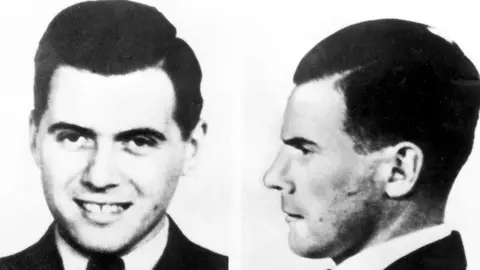
The decision to declassify these records represents a watershed moment for Swiss transparency regarding its World War II legacy. Switzerland's historical status as a neutral nation during the conflict has been increasingly complicated by revelations about its financial institutions' dealings with Nazi Germany and their alleged role in laundering Nazi gold. The government's commitment to revealing information about Mengele signals a growing willingness to confront uncomfortable chapters of the nation's past rather than maintain the carefully cultivated image of neutrality.
Historical evidence suggests that Mengele successfully evaded capture following Nazi Germany's defeat in 1945. The doctor went into hiding, using various aliases and moving between several countries before eventually establishing himself in South America under an assumed identity. The possibility that he spent time in Switzerland during this crucial transition period has intrigued historians and investigators for generations, particularly given Switzerland's reputation as a safe haven for individuals seeking to disappear and rebuild their lives away from Allied prosecution.
The files being opened by the Swiss government likely contain intelligence reports, immigration records, and surveillance documentation compiled by Swiss authorities during the immediate post-war years. These documents may reveal whether Swiss officials had any awareness of Mengele's presence within their borders, and if so, what actions they took in response. The declassification could also illuminate the broader network of individuals who may have assisted Nazi fugitives in transit through or within Switzerland.
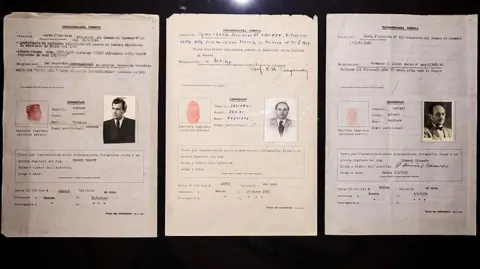
The Angel of Death earned his notorious nickname through his role as the primary physician overseeing the selection and medical experiments at Auschwitz-Birkenau. His victims numbered in the hundreds, and his name became forever linked with the systematic dehumanization and scientific cruelty that characterized the Holocaust. The personal accounts of survivors who encountered Mengele in the camps paint a chilling portrait of a man who combined the appearance of civility with the capacity for unimaginable cruelty.
Switzerland's opening of these files occurs within a broader international context of reckoning with World War II history. Many nations have undertaken similar declassification projects, recognizing that transparency about historical events, no matter how uncomfortable, serves the interests of justice and historical accuracy. The Swiss move reflects an acknowledgment that continued secrecy about potential Nazi connections would ultimately prove more damaging to national credibility than honest examination of the historical record.
Historians and researchers have long advocated for the release of these documents, arguing that understanding the full scope of post-war Nazi fugitive networks is essential for comprehending how many war criminals managed to evade justice. The systematic study of these networks has become increasingly important as it reveals the complicity of various nations, institutions, and individuals in allowing perpetrators of genocide to escape accountability. Switzerland's decision to contribute to this historical understanding represents an important step forward.
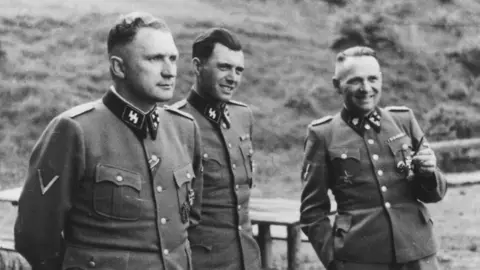
The anticipated release of these documents will likely attract significant international attention from academic institutions, human rights organizations, and survivors' advocacy groups. Research centers specializing in Holocaust studies and World War II history have already begun preparing to analyze the newly available materials. These institutions recognize that the Swiss files may contain crucial information that could fill gaps in the historical record and potentially answer long-standing questions about Mengele's movements and associates.
The timing of Switzerland's decision to declassify these records is also noteworthy given the advancing age of Holocaust survivors and the diminishing window of opportunity to gather firsthand testimony. By releasing these documents now, the Swiss government enables historians and researchers to connect newly available archival information with existing survivor accounts and testimonies, creating a more comprehensive understanding of this dark chapter of history. This approach recognizes that historical truth often emerges from the intersection of multiple sources and perspectives.
The declassification initiative extends beyond questions about Mengele himself to broader inquiries about how Switzerland managed its relationship with Nazi Germany and its aftermath. Documents may reveal the extent to which Swiss authorities monitored suspected Nazi fugitives, the protocols they followed for handling such cases, and whether political considerations influenced their response to suspected war criminals operating within Swiss territory or passing through the country.
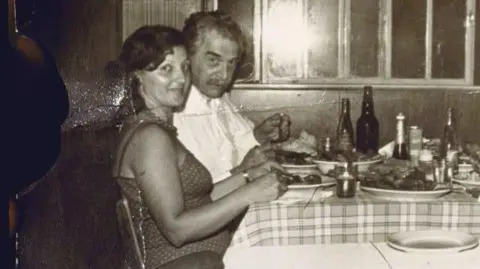
Ultimately, Switzerland's decision to open these secret files represents more than a single nation's reckoning with its past; it contributes to a global conversation about accountability, transparency, and historical responsibility. The documents may or may not confirm the long-standing rumors about Mengele's time in Switzerland, but their release ensures that whatever truth they contain will become part of the permanent historical record. This commitment to transparency honors the memory of Holocaust victims and demonstrates that even decades after the conclusion of World War II, societies continue to grapple with and learn from their complex histories.
Source: BBC News


