
Tiny Dinosaur Discovery Challenges Miniaturization Theory

A newly discovered fossil of a tiny alvarezsaurid dinosaur suggests the evolution of miniature dinosaurs wasn't as straightforward as previously believed.
Alvarezsaurids, mostly small-bodied theropod dinosaurs, were once mistakenly thought to be early flightless birds. It was later recognized that they were an ant-eating lineage of non-avian dinosaurs. The conventional wisdom held that they underwent evolutionary miniaturization to become more efficient at catching ants and other social insects.
However, a recently discovered fossil of one of the smallest alvarezsaurids ever found, called Alnashetri cerropoliciensis, suggests this narrative may be too simplistic. According to paleontologist Peter Makovicky of the University of Minnesota, this new species "was a pursuit predator actively hunting insects and small mammals" and likely did not feed on ants at all.
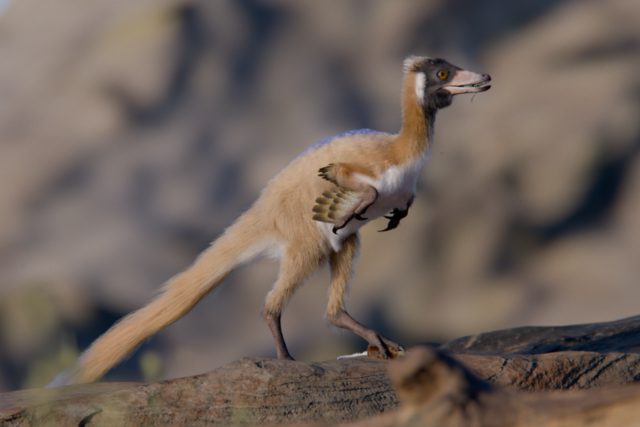
Alvarezsaurids are known for their short forelimbs tipped with a single oversized thumb claw, which was thought to be an adaptation for digging into termite mounds. They also had minute teeth and sensory adaptations akin to modern nocturnal birds - all features considered necessary for their specialized insect-eating lifestyle. "The explanation of their small body size has been tied to this specialization," Makovicky explained.
The discovery of Alnashetri, however, challenges this tidy hypothesis. Its long, slender arms and lack of adaptations for feeding on social insects suggest its miniaturization may have been driven by factors other than a specialized ant-eating diet. This finding leads paleontologists to rethink the evolutionary path that gave rise to these diminutive dinosaurs.
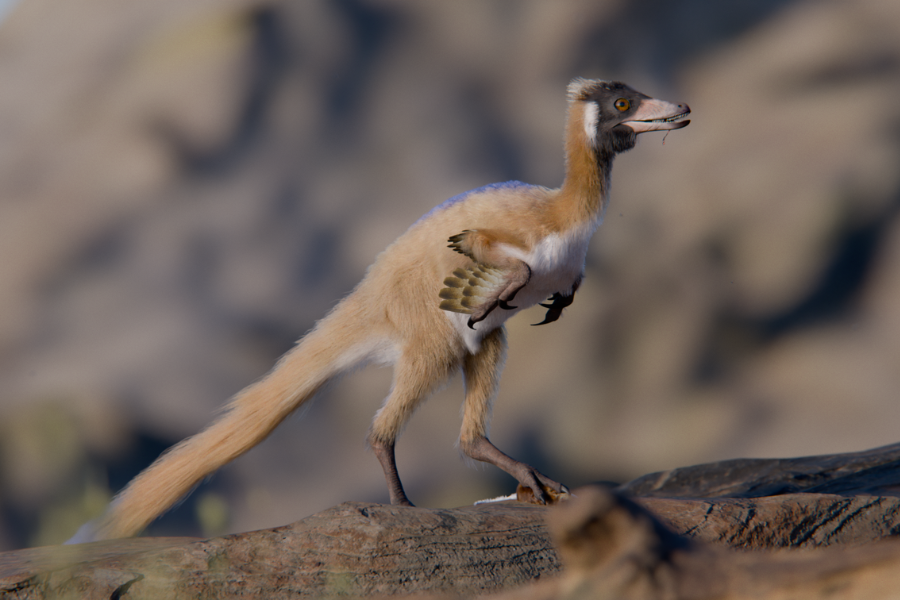
The fossil of Alnashetri was found in Late Cretaceous rocks in South America, alongside the remains of other alvarezsaurid species. This diversity of body sizes and feeding adaptations within the group indicates that the evolution of miniature dinosaurs was likely a more complex and variable process than previously understood.
The discovery of this oddball alvarezsaurid challenges paleontologists to reevaluate their assumptions about how and why dinosaurs underwent miniaturization. It suggests that the transition to smaller body sizes may have involved a range of ecological factors and evolutionary pressures, rather than a simple adaptation to a specialized diet.

As researchers continue to uncover new fossils and gain a deeper understanding of dinosaur evolution, the story of how these ancient reptiles became smaller and more diverse is likely to become increasingly complex and fascinating. The Alnashetri discovery is a prime example of how paleontology can upend our preconceptions and drive us to rethink long-held theories about the natural world.
Source: Ars Technica


