
Trump Demands 'Totally Independent' Fed Chair

President Trump calls for Federal Reserve leadership change, emphasizing need for independence while pressuring rate cuts. New Fed chair requirements revealed.
President Donald Trump has made significant demands regarding the leadership of the Federal Reserve, emphasizing that the next chair of the central bank must be totally independent from political pressure. This statement comes amid ongoing tensions between the administration and the Federal Reserve regarding monetary policy decisions, particularly concerning interest rate adjustments that have become a focal point of economic debate.
The president's comments reflect a complex relationship between the executive branch and the Fed, an institution that has long prided itself on independence from political influence. Trump's insistence on Federal Reserve independence marks a notable rhetorical shift, even as his administration continues to apply considerable pressure on the central bank's leadership to implement policies aligned with his economic agenda. This apparent contradiction underscores the delicate balance between maintaining institutional autonomy and responding to presidential preferences.
The current tension centers on interest rate policy and the Fed's approach to controlling inflation while supporting economic growth. The administration has repeatedly called for rate cuts, arguing that higher borrowing costs are hampering economic expansion and affecting consumers. Kevin Warsh's predecessor faced relentless criticism from the White House over decisions to maintain elevated interest rates, with the president using both public statements and private communications to express his displeasure with the Fed's monetary stance.
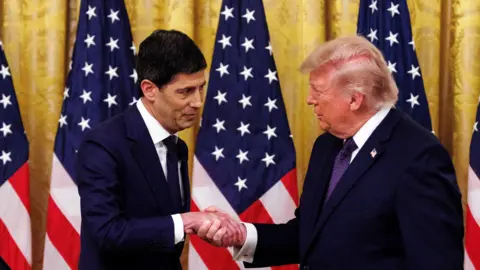
The search for a new Federal Reserve chair has become increasingly politicized, with the Trump administration seeking someone who shares its economic philosophy while publicly maintaining the appearance of independence. This presents a fundamental challenge: can the Fed chair truly be independent if they were selected partially for their alignment with administration preferences? Economic experts and institutional observers have raised concerns about how this selection process might affect the Fed's credibility and its ability to make decisions based solely on economic data rather than political considerations.
Trump's predecessor also faced pressure regarding rate cuts, but the intensity appears to have escalated under the current administration. The Fed's traditional role has been to set monetary policy based on economic indicators such as inflation, unemployment, and GDP growth, without regard to electoral cycles or political preferences. However, the increasing politicization of these decisions threatens to undermine the institution's foundational principle of independence, which has been crucial to its effectiveness since its establishment over a century ago.
The economic context for these demands is significant, as businesses and consumers navigate an uncertain landscape marked by inflation concerns, employment trends, and global economic headwinds. The interest rate environment directly affects borrowing costs for mortgages, car loans, and business expansion, making Fed policy decisions consequential for virtually every American. When political pressure influences these decisions, it potentially compromises the Fed's ability to act in the broader national economic interest rather than narrow political objectives.
The relationship between the presidency and the Federal Reserve has evolved throughout American history, with various administrations testing the boundaries of acceptable pressure. Franklin D. Roosevelt's era saw considerable tension, as did the stagflation of the 1970s when political pressure arguably contributed to suboptimal monetary policy decisions. More recent administrations have attempted to maintain the fiction of non-interference while simultaneously suggesting their preferences to Fed leadership, creating ambiguity about the institution's true autonomy.
Kevin Warsh's background and potential selection for a leadership role within the Fed demonstrates how the Trump administration approaches finding individuals who might advance its economic agenda. Warsh has previously served as a Federal Reserve governor and is known to hold views more aligned with the administration's preferred monetary approach. His involvement in any capacity within Fed leadership could influence the direction of policy, even if formal independence is maintained through structural means.
The tension between presidential economic preferences and central bank independence reflects broader questions about institutional autonomy in democratic systems. While elected officials like the president bear responsibility for overall economic outcomes, the Fed's independence is theoretically designed to insulate monetary policy from short-term political considerations that might lead to poor long-term outcomes. When presidents openly campaign for specific Fed policies, this delicate balance becomes strained.
The selection of a new Fed chair represents a critical moment for the institution's future independence and credibility. If the chosen individual is perceived as overly responsive to presidential preferences, market participants and international observers may question whether the Fed will make decisions based on economic fundamentals or political expediency. This perception alone could affect financial market stability and the Fed's ability to manage crises effectively in the future.
Looking forward, the Trump administration's approach to Federal Reserve leadership will likely continue to emphasize its preferred economic priorities while maintaining the rhetoric of institutional independence. The next Fed chair will face unprecedented scrutiny regarding their autonomy and decision-making processes, with every interest rate decision potentially viewed through a political lens. The challenge for this future leader will be navigating the expectations of the administration while preserving the Fed's institutional integrity and public trust.
Ultimately, Trump's demands for a "totally independent" Fed chair present a paradox that highlights the ongoing tension between democratic governance and institutional autonomy in modern American economics. The resolution of this paradox will have significant implications not only for monetary policy in the near term but also for the broader question of how independent agencies function within the American political system. The Federal Reserve's ability to maintain its credibility and effectiveness may depend on how successfully it navigates this challenging political environment.
Source: BBC News


