
Trump's Board of Peace Gets $10B While UN Starves

US channels $10 billion to Trump's private Board of Peace while Gaza aid trickles in and UN remains underfunded. Critical analysis of misplaced priorities.
While humanitarian aid continues to arrive in Gaza at devastatingly inadequate levels, the United States has made a controversial decision to allocate $10 billion to President Donald Trump's newly established Board of Peace. This massive funding commitment stands in stark contrast to the dire conditions on the ground, where relief organizations report that current aid flows fall catastrophically short of meeting basic human needs. The disparity between resources allocated to private initiatives versus established international mechanisms raises fundamental questions about American foreign policy priorities and accountability.
The situation in Gaza remains critically unstable, with temporary shelters remaining scarce across the territory and reconstruction materials severely limited by Israel's stringent controls on goods entering the region. According to United Nations assessments, conditions throughout Gaza continue to be characterized as "dire," with basic infrastructure destroyed and civilian populations struggling to access essential services. Despite the implementation of a ceasefire agreement, violence has not ceased entirely, with Israeli military strikes reportedly killing approximately 600 people since the cessation of major hostilities began.
The most troubling aspect of this resource allocation is the stark contrast between funding for Trump's Board of Peace and America's financial obligations to established international organizations. While $10 billion flows toward this private initiative, Washington has contributed merely $160 million toward its United Nations arrears, leaving more than $4 billion in outstanding obligations unpaid. This represents a fraction of what the US owes to international bodies that have decades of experience in conflict resolution and humanitarian assistance.
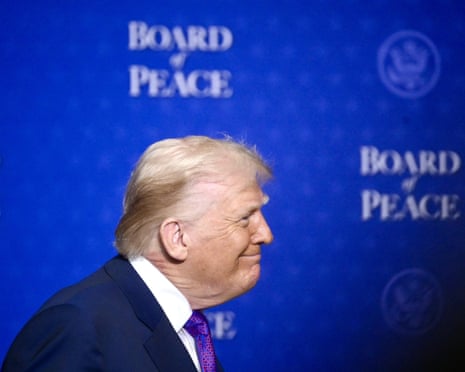
The fundamental question that emerges from this funding decision concerns why a private peace initiative receives such substantial capitalization while existing UN mechanisms remain severely underfunded and cash-strapped. The Board of Peace, operating under Trump's direct chairmanship, appears to prioritize private interests over established public good mechanisms that have proven track records in international crisis management. This approach suggests a concerning shift toward privatizing foreign policy initiatives that traditionally fall under multilateral international frameworks.
The Board of Peace has unveiled remarkably ambitious reconstruction plans that promise dramatic transformation of the Gaza Strip within relatively short timeframes. The initiative proposes to completely rebuild the city of Rafah within three years, featuring modern skyscrapers and contemporary urban infrastructure. These plans represent a significant departure from traditional post-conflict reconstruction approaches, which typically prioritize immediate humanitarian needs and gradual infrastructure development based on local community input and regional stability considerations.
Beyond reconstruction efforts, the Board of Peace has outlined a comprehensive governance transition plan that envisions Gaza achieving self-governance status within a decade. This timeline appears optimistic given the complex political dynamics, security challenges, and institutional capacity requirements necessary for sustainable autonomous governance. The proposal raises questions about how such governance structures would interface with existing Palestinian Authority frameworks and regional stakeholders who have legitimate interests in Gaza's political future.
Perhaps most ambitious is the planned deployment of an International Stabilisation Force, which is expected to begin operations with an eventual target strength of 20,000 troops. This military component represents a significant escalation in international involvement and raises complex questions about command structure, rules of engagement, and long-term mission objectives. The force's mandate, funding mechanisms, and relationship to existing international peacekeeping frameworks remain unclear, creating potential for operational conflicts and diplomatic complications.
While these initiatives present dramatic claims about transforming Gaza's future, their actual delivery mechanisms remain largely theoretical and notional. The Board of Peace has not provided detailed implementation timelines, specific contractor selections, or clear accountability measures for the substantial financial resources being allocated. This lack of transparency contrasts sharply with established international development protocols that require rigorous oversight, community consultation, and measurable outcome indicators.
The broader implications of this funding decision extend beyond Gaza to fundamental questions about American foreign policy methodology and international cooperation principles. By channeling substantial resources through a private entity chaired by a former president, the United States appears to be moving away from multilateral approaches that have traditionally characterized post-conflict reconstruction efforts. This shift toward private foreign policy initiatives could set concerning precedents for future international crisis responses.
The timing of this massive funding commitment is particularly problematic given the immediate humanitarian crisis requiring urgent attention and resources. While ambitious long-term reconstruction plans capture headlines, the immediate reality involves families lacking basic shelter, children without access to education, and communities struggling with damaged water and sanitation systems. The allocation of $10 billion to future-oriented projects while current humanitarian needs remain unmet raises serious questions about priority setting and resource management.
Furthermore, the privatization of peace initiatives through entities controlled by political figures creates inherent conflicts of interest and accountability gaps. Unlike established international organizations that operate under multilateral oversight and transparent governance structures, private boards lack the institutional safeguards necessary for managing substantial public resources in sensitive conflict zones. This structural problem becomes more acute when the entity's leadership has direct political interests that may not align with broader international peace and stability objectives.
The contrast between this $10 billion commitment and the ongoing underfunding of United Nations operations reveals a troubling pattern in American international engagement. While private initiatives receive massive capitalization, established multilateral institutions that provide essential humanitarian services, peacekeeping operations, and conflict mediation capabilities continue operating under severe financial constraints. This resource allocation undermines the very international systems that provide stability and legitimacy for long-term peace processes.
Sustainable peace in the Gaza region, and throughout the Middle East more broadly, requires adherence to international law, respect for sovereignty, and commitment to multilateral diplomatic processes. These foundations cannot be replaced by ego-driven initiatives or brinkmanship tactics that prioritize dramatic announcements over careful, methodical peace-building work. The Board of Peace's ambitious plans, while potentially well-intentioned, risk undermining established diplomatic channels and creating parallel structures that complicate rather than facilitate genuine conflict resolution.
The international community's experience with post-conflict reconstruction demonstrates that successful initiatives require deep community engagement, cultural sensitivity, and long-term institutional commitment that extends beyond individual political figures or administrations. Private boards, regardless of their financial resources, lack the institutional continuity and multilateral legitimacy necessary for sustained peace-building efforts. The Board of Peace's structure inherently limits its ability to provide the kind of sustained, apolitical support that successful reconstruction requires.
Moving forward, the United States must reconsider this resource allocation and prioritize funding for established international mechanisms that have proven capabilities in crisis response and peace-building. The $4 billion in outstanding UN obligations represents a significant impediment to international cooperation and undermines American credibility in multilateral forums. Addressing these arrears while supporting established humanitarian and development programs would demonstrate genuine commitment to international peace and stability rather than private political initiatives.
Source: The Guardian


