
Trump's Response to Criticism: Clarifying the US Attack on Iran

In a rebuke to his own allies, President Trump denies claims that the US attacked Iran only because Israel had planned to do so, contradicting comments made by Secretary of State Marco Rubio.
Trump attempted to counter a growing anti-Israel backlash in Congress and among his own Maga supporters on Tuesday by denying suggestions that he had been bounced into attacking Iran because Israel had already decided to do so.
Amid increasing criticism from opponents and allies, Trump rebuffed claims that he had struck Iran only because Israel had forced his hand, a suspicion fueled by comments made by the secretary of state, Marco Rubio.
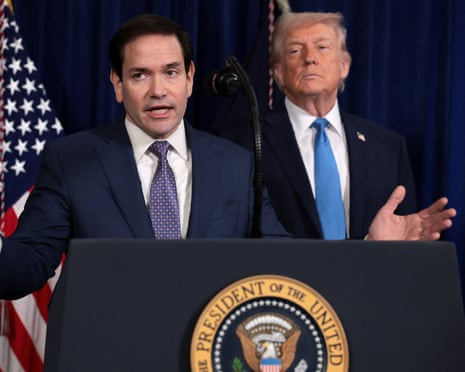
Rubio had stated that the US was reacting after learning that Israel planned to strike Iran, but Trump on Wednesday contradicted that explanation, asserting that the US acted independently in its decision to attack Iran.
The conflicting accounts have added to the confusion and controversy surrounding the US strike, which killed a top Iranian general and prompted a retaliatory missile attack by Iran on US forces in Iraq. Trump's denial of Rubio's claims suggests a rift within the administration over the rationale for the attack and the role of Israel in the decision-making process.
The episode has also fueled concerns among Trump's supporters, who have traditionally been staunch allies of Israel, about the president's willingness to stand up to the Jewish state. Some Maga supporters have expressed unease about the apparent influence of Israel on US foreign policy, particularly in the Middle East.
As the administration works to navigate the fallout from the Iran strike, the contradictory accounts from Trump and Rubio have only added to the political challenges facing the president. The episode underscores the delicate balance Trump must strike between appeasing his base and maintaining relationships with key allies like Israel.
Ultimately, the divergent narratives from Trump and Rubio have raised further questions about the decision-making process that led to the attack on Iran and the broader strategy guiding US foreign policy in the Middle East. As the administration continues to grapple with the aftermath, the president's ability to maintain control of the messaging and retain the support of his base will be crucial in the weeks and months ahead.
Source: The Guardian


