
Trump's Venezuela Intervention: Four Months Later

Guardian correspondent Tom Phillips examines life in Venezuela following Maduro's controversial arrest and Trump's military intervention in this revealing podcast.
In a compelling discussion with host Annie Kelly, Tom Phillips, the Guardian's esteemed Latin America correspondent, provides an in-depth account of the dramatic transformations unfolding in Venezuela four months after the controversial US-led abduction of former president Nicolás Maduro. Phillips brings firsthand expertise and on-the-ground reporting to shed light on the complex political situation that has captivated international attention and raised questions about the effectiveness of foreign intervention in the troubled nation's internal affairs.
"The last time I flew out of Venezuela was right at the start of August 2024, just after the disputed presidential election," Phillips recalls, setting the scene for understanding the tumultuous period that followed. This timing proved critical, as the election results themselves became the focal point of intense international scrutiny and domestic controversy. The departure marked a turning point not only for the journalist but for countless Venezuelans facing an increasingly volatile security situation that would reshape the country's political landscape over the following months.
The Venezuelan presidential election of August 2024 became the catalyst for unprecedented upheaval. "It was a moment of real turmoil," Phillips explains, capturing the atmosphere of uncertainty that gripped the nation. The disputed results and Maduro's refusal to concede defeat created a powder keg of political tension that threatened to destabilize the entire region. International observers questioned the legitimacy of the electoral process, while ordinary citizens grappled with the implications of another contested democratic exercise in a nation already battered by years of economic crisis and political dysfunction.
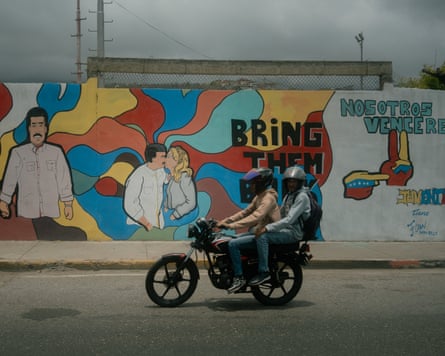
The aftermath of the election witnessed widespread government repression on a scale that shocked even seasoned observers of Venezuelan politics. "There was a huge wave of repression that was unfolding as Nicolás Maduro tried to silence any kind of dissent to his bogus claim to have won that election," Phillips details, emphasizing the systematic nature of the crackdown. Maduro's government deployed security forces to suppress opposition voices and quell any organized resistance to his contested electoral victory. The regime's response highlighted its determination to maintain power at any cost, regardless of democratic norms or international condemnation.
The human toll of this repression became immediately apparent in the weeks following the election. Thousands of Venezuelans were summarily arrested on charges of sedition, conspiracy, and opposition to the government. Detention centers became overcrowded as security forces rounded up suspected dissidents, protest organizers, and political opponents. Many detainees reported torture and inhumane conditions, while families desperately searched for information about their arrested loved ones. The scale of the crackdown represented one of the most aggressive campaigns against civil liberties in the country's recent history, drawing condemnation from international human rights organizations and foreign governments.
Beyond official arrests, many Venezuelans chose to go underground rather than risk capture by state security forces. Opposition activists, civil society leaders, and journalists found themselves hunted, forcing them into hiding or constant vigilance. Safe houses and clandestine networks became essential infrastructure for those opposing the regime. This underground resistance movement, though fragmented and facing enormous challenges, represented a stark reminder of the depths to which the political situation had deteriorated. The fear and paranoia that gripped society made normal life increasingly difficult for ordinary citizens caught in the crossfire.
Journalists operating in Venezuela faced particularly acute dangers during this period. International news organizations, including the Guardian, made the difficult decision to withdraw their correspondents from the country to protect their safety. "Journalists were racing to get out of the country," Phillips recalls, underscoring the severity of the threat environment. The closure of independent news outlets and the arrest of prominent journalists signaled the regime's determination to control the information environment and prevent coverage of government abuses from reaching international audiences.
The departure of foreign correspondents and international media presence created an information vacuum that benefited the Maduro regime. With fewer independent observers on the ground documenting events, the government gained greater latitude in shaping narratives about what was happening within Venezuela's borders. Citizen journalism and social media became critical tools for those seeking to document and share accounts of repression, though these channels remained subject to state surveillance and monitoring. The loss of established media infrastructure raised troubling questions about accountability and the ability of the international community to monitor human rights conditions.
Against this backdrop of domestic turmoil, the Trump administration's military intervention emerged as a controversial and transformative development. The decision to order the abduction of Maduro represented an unprecedented escalation in US involvement in Venezuelan affairs, moving beyond diplomatic and economic measures into direct military action. Proponents argued that removing Maduro was necessary to prevent further humanitarian catastrophe and establish conditions for democratic restoration. Critics contended that unilateral military intervention violated international law and Venezuelan sovereignty, setting dangerous precedents for future US foreign policy decisions.
Four months following Maduro's removal, Phillips's reporting reveals a nation grappling with profound uncertainty about its future direction. While some Venezuelans viewed the intervention as a potential turning point toward restoration of democratic governance, others worried about the implications of direct foreign military action in their homeland. The transition period has proven complicated, with questions remaining about how Venezuela will establish legitimate governance, address the humanitarian crisis, and rebuild institutions damaged by years of authoritarian rule. International observers continue to debate whether the Trump administration's approach will ultimately prove beneficial or merely create new challenges for an already traumatized population.
The broader implications of the US intervention extend far beyond Venezuela's borders, affecting regional dynamics throughout Latin America and raising questions about international norms governing sovereignty and intervention. The podcast discussion between Phillips and Kelly explores these multifaceted dimensions of the Venezuelan crisis, offering listeners a comprehensive understanding of the situation as it has evolved following Maduro's controversial removal. Through detailed reporting and expert analysis, the conversation illuminates the human dimensions of political upheaval and the complex consequences of foreign military intervention in fragile states already struggling with deep institutional and economic challenges.
Source: The Guardian


