
Trump Threatens UN Budget Cuts Over Trade Policy

Trump administration pressures UN to adopt trade-focused policies, threatening budget cuts. USAID faces massive restructuring with global health concerns mounting.
The Trump administration is intensifying pressure on the United Nations and the broader international development sector to fundamentally shift away from traditional aid models toward trade-focused policies that prioritize American commercial interests. Officials have made it explicitly clear that failure to comply with this new approach could result in substantial additional budget reductions, marking a significant departure from decades of US international engagement strategy.
This strategic shift represents a dramatic reimagining of America's role in global development and humanitarian assistance. Rather than channeling resources through traditional development assistance mechanisms, the administration is championing what it calls a "trade over aid" agenda—one that emphasizes free-market private investment arrangements that are designed to create commercial opportunities for American businesses while ostensibly promoting economic growth in recipient nations.
The consequences of these policy changes are already being felt across the globe, as USAID, the primary vehicle for US foreign aid delivery, has undergone massive organizational upheaval. The agency has experienced significant workforce reductions affecting thousands of employees, and its remaining operational structure has been consolidated into the State Department, fundamentally altering how development programs are administered and implemented.
Experts and development specialists are expressing deep concern about the ripple effects of these sweeping changes. Organizations focused on global health, poverty reduction, education, and humanitarian relief have warned that the disruption to established aid programs could result in tragic human costs. The loss of institutional knowledge and continuity in ongoing projects threatens to undermine years of progress in areas ranging from disease prevention to economic development in some of the world's most vulnerable regions.
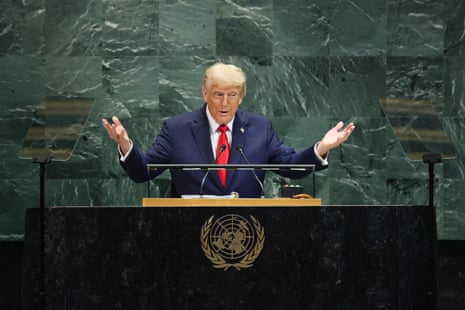
The UN budget cuts threatened by Trump officials represent another dimension of this pressure campaign. By leveraging the United States' substantial financial contributions to UN operations, the administration is using budgetary leverage as a tool to force the international organization to realign its priorities and programming toward models that emphasize private sector engagement over traditional governmental and multilateral assistance frameworks.
Proponents of the administration's approach argue that private investment and commercial partnerships can be more efficient and sustainable than traditional aid models. They contend that by encouraging American companies to invest directly in developing economies, they create jobs, transfer technology, and establish market-based relationships that foster long-term economic stability. This philosophy reflects a broader belief that charity-based approaches have limitations and that profit-driven investments generate better outcomes for all parties involved.
However, critics argue that the "trade over aid" philosophy fundamentally misunderstands the nature of global humanitarian challenges and development needs. Many regions and populations that depend on US assistance lack the market conditions, infrastructure, and investment climate that would attract private capital regardless of policy encouragement. Essential services like vaccination programs, maternal health care, basic education, and food security assistance for crisis-affected populations cannot reliably be provided through profit-motivated commercial arrangements.
The consolidation of USAID into the State Department raises additional concerns about the politicization of development work. Development professionals have long emphasized the importance of keeping humanitarian assistance separate from diplomatic and political considerations, arguing that this separation is essential for maintaining trust with local populations and ensuring that aid reaches those who need it most regardless of geopolitical alignments or strategic interests.
The global health sector has been particularly vocal about potential consequences. Organizations working on infectious disease control, pandemic preparedness, and reproductive health services have emphasized that many of their most critical activities operate in regions where market dynamics do not incentivize private investment. The withdrawal or significant reduction of US support for these programs could have severe public health implications that extend far beyond the immediate beneficiary countries.
The timing of these changes is particularly concerning to development advocates, as the world continues to grapple with multiple simultaneous crises. Humanitarian emergencies in various regions require sustained international assistance, climate change adaptation requires long-term commitment and funding, and development goals that require continued focus on health, education, and poverty reduction cannot easily be retrofitted into commercial investment models without significant loss of effectiveness.
The administration's approach also reflects a broader reassessment of America's international engagement philosophy. For decades, US foreign policy has incorporated development assistance as a tool for building diplomatic relationships, supporting allies, and advancing broader geopolitical interests alongside humanitarian objectives. The Trump administration is fundamentally repositioning this balance to emphasize immediate commercial benefit to American interests as the primary justification for international engagement.
Meanwhile, international partners and multilateral organizations are beginning to adjust their strategies in response to the changing US stance. Some are exploring alternative funding sources and partnerships to compensate for anticipated American reductions, while others are reconsidering how they structure their engagement with the United States on development and humanitarian matters. The EU and other major development players are reassessing their own commitments and collaborative approaches.
The international aid sector broadly is experiencing uncertainty as implementers and organizations attempt to understand how these policy shifts will ultimately affect funding streams, program design requirements, and the overall architecture of global development cooperation. Many organizations that have received US funding for decades are developing contingency plans and seeking to diversify their funding sources to mitigate the risk of sudden withdrawals or reductions.
Development economists and policy analysts continue to debate whether the "trade over aid" model can effectively address global development challenges at scale. While some acknowledge potential benefits of increased private sector engagement, most emphasize that a mixed approach combining both commercial investment and strategic humanitarian assistance represents the most effective pathway forward. The complete pivot toward commercial models, they argue, risks creating significant gaps in coverage for essential services and populations that markets alone cannot effectively serve.
Source: The Guardian


