
Trump Turns Wartime Leader: Unexpected Shift From 'Peace President'

An in-depth look at how Trump's foreign policy stance evolved from 'peace president' to launching a major military operation against Iran, despite his previous opposition to foreign entanglements.
Donald Trump, once touted as the 'peace president', has taken a dramatic turn towards military action, ordering the launch of a major war on Iran last Friday. This unexpected shift in the US president's foreign policy has caught many by surprise, given his previous opposition to foreign entanglements.
The fateful decision was made aboard Air Force One as Trump was en route to Corpus Christi, Texas to deliver a speech on American energy dominance. During the three-hour flight, the president had engaged in discussions with Texas Republican politicians, including the state's two hawkish senators, John Cornyn and Ted Cruz, about his options in Iran.
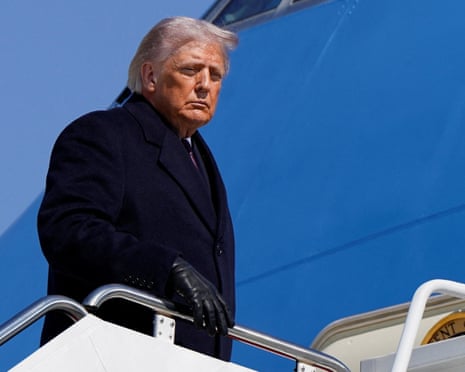
Trump's road to war has been a surprising one, given his previous rhetoric and promises of a more isolationist foreign policy. As a candidate, he had campaigned on a platform of ending 'endless wars' and bringing US troops home. However, in reality, his opposition to foreign entanglements had only ever been partial.
During his time in office, Trump has maintained a complex and often contradictory approach to global affairs. While he has occasionally expressed a desire to withdraw from certain conflicts, he has also been quick to authorize the use of military force in response to perceived threats, as evidenced by his decision to order the drone strike that killed Iranian general Qasem Soleimani in 2020.
The Operation Epic Fury, as the war on Iran has been dubbed, represents a significant escalation of US involvement in the Middle East, a region that has long been a source of conflict and instability. The decision to launch this military operation comes at a time of heightened tensions between the US and Iran, with the two countries engaging in a series of tit-for-tat actions in recent months.
While the specifics of the operation remain unclear, it is likely to involve a multifaceted assault on Iranian targets, including military installations, nuclear facilities, and other strategic assets. The potential for the conflict to escalate and draw in other regional actors, such as Israel and Saudi Arabia, is a major concern for many observers.
The shift from 'peace president' to wartime leader has been a remarkable and somewhat unexpected development in Trump's presidency. It remains to be seen how the conflict will unfold and what the long-term consequences will be for the US, Iran, and the broader Middle East region. As the situation continues to evolve, the world will be watching closely to see how the president navigates this complex and volatile geopolitical landscape.
Source: The Guardian


