
Tulsi Gabbard Resigns as US Intelligence Director

Tulsi Gabbard steps down as US director of national intelligence after tumultuous tenure marked by sidelining during Trump's Venezuela and Iran attacks.
Tulsi Gabbard, the US director of national intelligence, has announced her resignation from her position following a particularly turbulent and challenging period in office. Her departure marks the end of a tenure characterized by significant marginalization within the Trump administration, particularly as the president pursued aggressive foreign policy initiatives targeting Venezuela and Iran. The resignation comes as a notable shift in the administration's intelligence leadership structure and raises questions about the dynamics within Trump's inner circle during a pivotal moment in US international relations.
In an official letter addressed to President Donald Trump, Gabbard formally notified the administration of her intention to step down, with her departure scheduled for June 30th. Her written statement acknowledged the accomplishments achieved during her tenure while simultaneously recognizing the substantial work that still remains to be completed within the intelligence community. The carefully worded resignation letter suggested both a sense of completion regarding certain initiatives and an implicit acknowledgment of the challenges she faced in her role overseeing the nation's intelligence operations.
Throughout her tenure as director of national intelligence, Gabbard found herself increasingly isolated within the administration's decision-making processes. As Trump intensified his administration's focus on Latin America and the Middle East, the intelligence director was notably excluded from key policy discussions and announcements. This sidelining of Gabbard became particularly evident as the administration rolled out its controversial positions toward Venezuela's government and escalated rhetoric regarding Iran's regional activities and nuclear program.
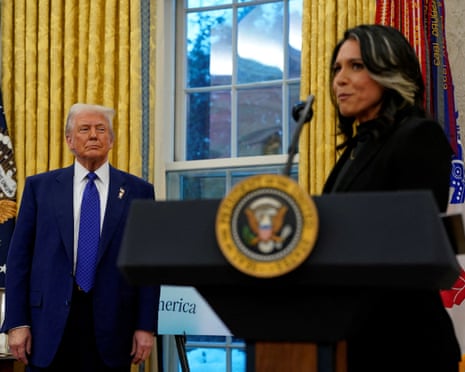
The resignation underscores broader tensions within Trump's administration regarding foreign policy direction and intelligence gathering priorities. Gabbard's marginalization reflects deeper disagreements about how US intelligence operations should support the administration's international agenda. Her departure suggests potential friction between the intelligence community's traditional analytical frameworks and the administration's more ideologically driven approach to foreign policy matters, particularly concerning major geopolitical adversaries in the Western Hemisphere and Middle East.
During her time in office, Gabbard was expected to provide intelligence assessments and briefings that would inform the administration's decision-making on critical national security matters. However, the apparent disconnect between her position and the administration's actual policy implementation suggests that her intelligence assessments may not have aligned with Trump's preferred policy directions. This dynamic is not uncommon in presidential administrations, where intelligence professionals sometimes clash with political appointees over threat assessment priorities and policy recommendations.
The timing of Gabbard's resignation carries particular significance given the current international climate and the administration's focus on specific regional challenges. Her departure comes at a moment when tensions with both Venezuelan and Iranian governments have escalated, with the Trump administration pursuing increasingly confrontational diplomatic and economic strategies. The intelligence director's exit may signal either her disagreement with these approaches or simply her inability to influence policy decisions from her position within the national security apparatus.
Gabbard's background prior to joining Trump's intelligence leadership included her tenure as a US Representative and her involvement in various foreign policy debates within Democratic Party circles before her shift toward closer alignment with Republican positions. Her appointment as director of national intelligence was itself somewhat controversial, given her non-traditional career path within the intelligence community and her outspoken views on numerous foreign policy matters. Throughout her tenure, these factors may have contributed to the challenges she faced in gaining full acceptance and influence within the intelligence establishment.
The resignation process outlined in her letter indicates a professional and orderly transition, with Gabbard providing adequate notice for the administration to identify and prepare her successor. The June 30th departure date allows time for the administration to navigate the personnel transition while maintaining continuity in intelligence operations. However, the relatively brief notice period and the circumstances surrounding her sidelining suggest that this may not be an entirely voluntary departure driven by Gabbard's own strategic timing.
Looking ahead, Gabbard's exit from the intelligence community raises important questions about the future direction of US intelligence priorities under Trump's continued leadership. The administration will need to identify a replacement for the director position who can work more seamlessly with the president's foreign policy objectives while maintaining the integrity and professionalism expected from intelligence leadership. This process will likely involve significant consideration of how the intelligence community can better align with administrative priorities while still maintaining its core analytical functions.
The broader implications of intelligence leadership transitions in presidential administrations extend beyond personnel changes. They often reflect shifting priorities in national security policy and changes in how the administration weighs different regional threats and opportunities. Gabbard's departure may presage further adjustments in how the administration approaches intelligence gathering, threat assessment, and the role of intelligence professionals in shaping foreign policy decisions regarding key adversaries and strategic regions.
In her resignation letter, Gabbard struck a diplomatic tone, emphasizing progress while acknowledging incomplete work within the intelligence directorate. This balanced language likely reflects her desire to depart on civil terms while protecting her reputation and future career prospects. Her statement suggests that she views her resignation as a mutual understanding rather than a forced removal, though the circumstances surrounding her sidelining indicate deeper structural issues with her role and influence within the administration.
As the administration moves forward without Gabbard's leadership in the intelligence community, observers will closely monitor how US intelligence priorities and assessments evolve, particularly regarding the Latin American and Middle Eastern concerns that dominated the policy landscape during her tenure. The selection of her successor and the policy directions pursued by the new intelligence leadership will provide important signals about the administration's long-term strategic vision and its relationship with the intelligence community's traditional institutional roles and responsibilities.
Source: The Guardian


