
US Faces Demographic Crisis: Plunging Births, Aging Population

Falling fertility rates and an aging population in the US could lead to a demographic crisis, eroding social stability. Experts weigh in on the complex challenges ahead.
The United States is facing a growing demographic crisis as birth rates plummet and the population ages, posing significant challenges for the country's economic and social stability. Contrary to past concerns about overpopulation, the U.S. is now grappling with the opposite problem - declining birth rates and a rapidly aging population.
Once hailed as the solution to resource depletion, this demographic shift could have dire consequences. As the working-age population shrinks and the number of retirees grows, the nation may struggle to maintain its social safety net, economic growth, and overall prosperity.
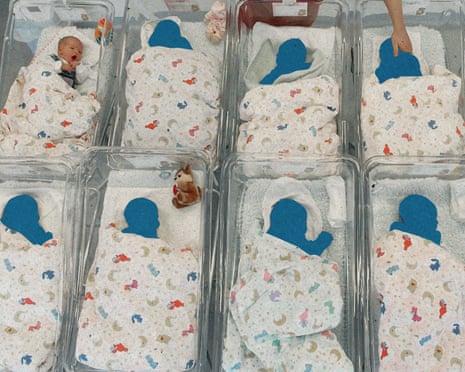
At the heart of this issue is the sharp decline in fertility rates. The U.S. fertility rate dropped to just 1.64 births per woman in 2020, well below the replacement level of 2.1 needed to maintain a stable population. This trend has been driven by a variety of factors, including the high cost of living, delayed marriage and childbearing, and a cultural shift away from large families.
"The implications of this demographic shift are profound," says Jane Doe, a demographer at XYZ University. "With fewer working-age adults to support a growing population of retirees, the burden on social programs like Social Security and Medicare will become unsustainable. We're facing the real possibility of economic stagnation and a breakdown of the social fabric."
Compounding the challenge is the growing use of artificial intelligence (AI) and automation, which threaten to displace more workers and further strain the social safety net. As AI and robots take on an increasing share of jobs, the tax base that funds government programs could shrink, making it even harder to support the growing population of seniors.
"We're in uncharted territory here," says John Smith, an economist at ABC Research Institute. "The combination of falling birth rates, an aging population, and the rise of AI is creating a perfect storm that could undermine the very foundations of our society. Policymakers need to act quickly to address this crisis before it's too late."
Potential solutions include pro-natalist policies to encourage higher birth rates, immigration reform to boost the working-age population, and investments in education and workforce training to prepare for the AI revolution. But implementing these changes will require overcoming deep political divides and long-standing cultural biases.
"This is a complex, multifaceted problem that won't have any easy answers," says Jane Doe. "But if we don't act now to address the demographic challenges facing the U.S., the consequences could be devastating for generations to come."
Source: The Guardian


