
US Military Strikes Kill 11 in Drug Boat Operations

American forces target three alleged drug-smuggling vessels in Caribbean and Pacific, bringing total deaths to 145 in Trump's anti-narcotics campaign.
The United States military has escalated its aggressive campaign against suspected drug trafficking operations, with recent strikes on three alleged smuggling vessels resulting in the deaths of 11 individuals. These coordinated attacks, carried out across strategic waterways in the eastern Pacific Ocean and Caribbean Sea, represent one of the most lethal single-day operations in the Trump administration's ongoing pursuit of what officials have labeled "narco-terrorists."
The military engagement on Monday marks a significant intensification of the administration's anti-drug enforcement strategy, which has increasingly relied on direct military intervention rather than traditional law enforcement approaches. According to defense officials, the targeted vessels were identified through intelligence operations and surveillance networks designed to track suspicious maritime activity in known drug trafficking routes.
Since the initiation of this aggressive campaign in September, when President Donald Trump formally authorized American armed forces to engage suspected drug smugglers on the high seas, the operation has resulted in a mounting death toll. The latest strikes bring the total number of fatalities to 145 individuals, raising questions about the proportionality and effectiveness of this military-first approach to combating international narcotics trade.
The scope of these operations has been substantial, with military records indicating 42 confirmed strikes have been conducted across notorious smuggling corridors. These waterways, particularly the Caribbean Sea and eastern Pacific Ocean, serve as critical transit routes for narcotics flowing from South American production centers toward North American markets. The strategic importance of these maritime pathways has made them focal points for both traffickers and interdiction efforts.
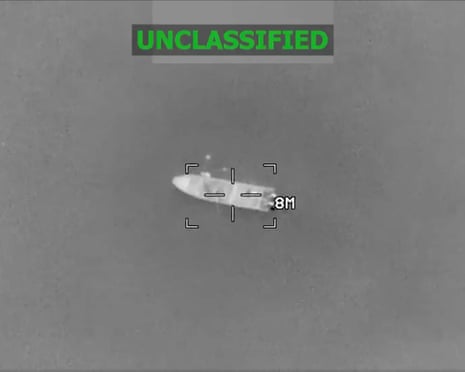
Defense Department sources have characterized the campaign as a necessary response to what they describe as an evolving threat from organized criminal networks operating sophisticated maritime smuggling operations. These groups, according to military intelligence assessments, have increasingly utilized high-speed vessels, advanced navigation technology, and coordinated logistics networks to transport substantial quantities of cocaine, fentanyl, and other controlled substances.
The designation of these smugglers as "narco-terrorists" by the Trump administration has provided the legal framework for military engagement under anti-terrorism authorities. This classification allows for the use of lethal force against suspected traffickers, representing a significant departure from previous administrations' approaches that primarily relied on coast guard interdictions and criminal justice proceedings.
Monday's operations involved coordinated strikes across multiple geographical areas, demonstrating the military's expanded operational capacity in maritime drug interdiction. The eastern Pacific operation targeted vessels believed to be transporting cocaine from Colombian and Ecuadorian ports, while Caribbean strikes focused on routes traditionally used to smuggle narcotics through island nations toward Florida and other southeastern United States entry points.
Intelligence officials report that the targeted vessels were monitored for extended periods before the decision to engage was authorized. Surveillance data indicated the boats were operating in patterns consistent with drug smuggling activities, including unusual navigation routes, attempts to avoid detection, and communications intercepts suggesting coordination with larger trafficking networks.
The escalation has drawn attention from congressional oversight committees, with some lawmakers questioning whether the military campaign represents an appropriate use of defense resources and authority. Critics argue that the high casualty rate raises concerns about due process and the presumption of innocence, particularly given the challenges of definitively identifying drug smugglers versus legitimate maritime operators in international waters.
Supporters of the program, however, point to intelligence reports suggesting that the aggressive approach has disrupted established trafficking networks and forced criminal organizations to alter their operational methods. Defense officials claim that the campaign has resulted in significant seizures of narcotics and has degraded the operational capabilities of major trafficking organizations.
The international implications of these operations have also generated diplomatic discussions, particularly with Latin American nations whose territorial waters border the operational areas. Some regional governments have expressed concerns about the militarization of anti-drug efforts, while others have welcomed increased American involvement in combating transnational criminal organizations.
Maritime security experts note that the campaign represents a fundamental shift in how the United States approaches drug interdiction, moving from a model focused on seizure and arrest to one emphasizing disruption and elimination of trafficking capabilities. This approach reflects broader changes in national security strategy that increasingly blur the lines between law enforcement and military operations.
The operational tempo of these strikes has increased significantly in recent months, with military commanders reporting enhanced intelligence sharing between agencies and improved coordination between different service branches. The integration of advanced surveillance technologies, including satellite monitoring and drone reconnaissance, has enabled more precise targeting of suspected trafficking vessels.
Each strike operation involves extensive planning and authorization processes, with legal reviews conducted to ensure compliance with international maritime law and rules of engagement. Military officials emphasize that all targeted vessels are assessed to pose legitimate threats and that efforts are made to minimize civilian casualties while achieving operational objectives.
The broader context of this campaign includes rising concern about fentanyl trafficking and its contribution to the opioid crisis affecting American communities. Administration officials frequently cite overdose statistics and public health data to justify the aggressive approach, arguing that traditional interdiction methods have proven insufficient to address the scale of the trafficking problem.
Looking ahead, military planners are developing expanded capabilities for maritime interdiction, including additional vessel deployments and enhanced surveillance systems. The success metrics for the program focus not only on direct interdictions but also on broader disruption of trafficking networks and deterrent effects on potential smugglers considering maritime routes.
Source: The Guardian


