
US, Nigeria Kill Top ISIS Leader in Joint Op

President Trump announces the elimination of ISIS senior commander Abu-Bilal al-Minuki in coordinated military operation with Nigerian forces.
President Trump announced a significant military victory on Tuesday, declaring that US and Nigerian forces had successfully eliminated a senior ISIS leader in a joint operation. The targeted individual, identified as Abu-Bilal al-Minuki, was characterized by the administration as the most active terrorist in the world and represented a major threat to international security and regional stability across multiple continents.
The joint military operation demonstrated the effectiveness of international cooperation in combating global terrorism. Trump emphasized the importance of this partnership between American forces and Nigerian military personnel, highlighting how coordinated efforts can achieve decisive results against high-value terrorist targets. The operation's success underscores the ongoing commitment of allied nations to dismantle extremist networks that pose persistent threats to civilians and government stability.
Abu-Bilal al-Minuki had been a particularly active and dangerous operative within the Islamic State's hierarchy, orchestrating numerous attacks and recruitment campaigns across Africa and beyond. His elimination represents a substantial blow to the terrorist organization's operational capacity and command structure. The removal of such key figures weakens the group's ability to plan and execute coordinated attacks.
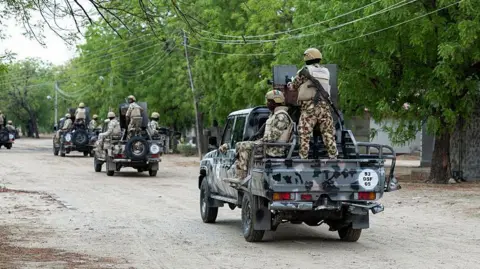
The Trump administration framed this military action as part of its broader counterterrorism strategy aimed at degrading ISIS capabilities worldwide. Officials stressed that eliminating senior terrorists of al-Minuki's stature disrupts command and control networks, reduces organizational effectiveness, and saves countless civilian lives. The operation reflects the administration's commitment to taking direct action against identified terrorist threats, regardless of their geographic location.
Nigeria has been a critical partner in the fight against ISIS-affiliated militant groups, particularly the faction known as ISIS West Africa Province (ISWAP). The collaboration between US and Nigerian military forces demonstrates the value of sustained international partnerships in addressing transnational security challenges. Nigerian forces have extensive experience operating in the Sahel region, where terrorist organizations have established significant footholds and operational bases.
The identification and elimination of al-Minuki required extensive intelligence gathering and surveillance operations. Intelligence agencies from both nations worked together to locate and track the terrorist leader, combining satellite imagery, human intelligence sources, and signals intelligence to establish his location and confirm his identity. This intelligence-led approach reflects modern counterterrorism practices that emphasize precision and accuracy in targeting operations.
According to Trump's statement, al-Minuki had been involved in planning and coordinating terrorist attacks across multiple regions, making him one of the most consequential targets in the ongoing war against ISIS. His operational tempo and reach extended beyond traditional ISIS strongholds in Iraq and Syria, spanning operations in Africa where the group has expanded its influence significantly. The removal of such a prominent figure could disrupt planned attacks and demoralize remaining operatives.
The announcement also highlighted the capabilities of special operations forces and the advanced technology employed in modern counterterrorism efforts. Precision-guided operations designed to minimize civilian casualties have become hallmarks of contemporary military interventions against terrorist targets. The success of this joint operation validates the continued investment in specialized training, intelligence capabilities, and military technology dedicated to combating extremist threats.
International observers have noted that terrorist group leadership transitions can create temporary instability within organizations, sometimes leading to internal conflict over succession and strategic direction. The death of a senior commander often prompts reorganization and potentially exposes vulnerabilities that intelligence agencies and military forces can exploit. However, experts caution that eliminating individual terrorists, while important, requires sustained pressure on the broader organizational structure.
The counterterrorism partnership between the United States and Nigeria has evolved significantly over the past decade, with increasing military coordination, intelligence sharing, and joint training exercises. Both nations recognize that terrorist organizations operating in the Sahel region and West Africa pose shared security threats that require coordinated responses. American military advisors and special forces have worked alongside Nigerian counterparts to enhance operational effectiveness and build institutional capacity.
Trump's announcement also served to underscore the administration's focus on concrete security achievements and measurable progress against identified threats. The elimination of high-profile terrorist leaders provides tangible evidence of counterterrorism success and justifies the substantial resources devoted to these operations. However, security experts emphasize that sustained effort over time remains essential to prevent the emergence of successor organizations or the franchise expansion of existing terrorist groups.
The operation reflects broader geopolitical realities in which African countries increasingly serve as important partners in global security architecture. Nigeria's strategic importance stems from its location, military capacity, and willingness to engage in joint operations with the United States. The partnership between Washington and Abuja demonstrates how bilateral security relationships can produce significant operational results against transnational terrorist networks.
As the fight against ISIS continues globally, the elimination of senior leaders remains a priority for US policymakers and military commanders. Each successful operation against high-value targets contributes incrementally to the degradation of terrorist organizations' capabilities. The announcement of al-Minuki's death reinforces the message that terrorist leaders face relentless pursuit from international forces committed to eliminating extremist threats wherever they operate.
The success of this joint military operation between US and Nigerian forces provides momentum for continued international cooperation in counterterrorism efforts. Future operations will likely build on the intelligence, relationships, and operational experience gained from this and similar missions. As terrorist organizations adapt and evolve, the intelligence agencies and military forces opposing them must remain equally dynamic and committed to preventing attacks and protecting civilian populations worldwide.
Source: BBC News


