
West Bank & Gaza Hold Local Elections Amid Political Tensions

Palestinians in the West Bank and Gaza participate in local elections while major political factions including Hamas abstain from voting.
Palestinian local elections took place across the occupied West Bank and in select areas of Gaza, marking a significant moment for grassroots political participation in the territories. The electoral process unfolded amid complex political circumstances, with voters determining leadership in municipal councils and local governance structures. This electoral engagement reflected attempts to maintain democratic processes despite the challenging security and political environment facing Palestinian communities.
The voting initiative represented an important opportunity for West Bank Palestinians to exercise their democratic rights at the municipal level, where local representatives make decisions affecting everyday life in towns and cities. Citizens cast ballots to elect leaders who would address issues ranging from infrastructure development to educational services and community welfare programs. The participation in these elections demonstrated a continued commitment to civic engagement even as broader political divisions persisted among Palestinian factions.
Notably, major Palestinian political groups including Hamas and several other significant organizations chose not to participate in the electoral process. This abstention by prominent factions highlighted ongoing tensions within Palestinian politics and disagreements over the timing and framework of such elections. The absence of these groups fundamentally altered the political landscape of the voting process, concentrating participation among smaller parties and independent candidates.
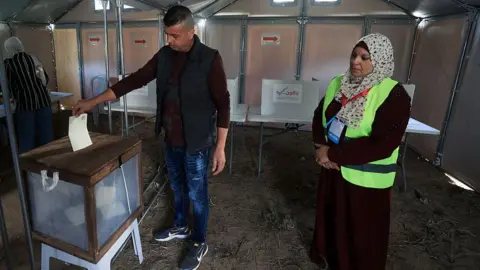
The Gaza local elections were conducted in more limited fashion, with voting restricted to one major city rather than encompassing the entire territory. This geographic limitation reflected the complicated political situation in Gaza, where different factions exercise varying degrees of control and influence. The decision to conduct elections in this circumscribed manner represented a compromise approach to maintaining some electoral processes while acknowledging the practical and political obstacles to territory-wide voting.
In the occupied West Bank, the electoral process involved numerous municipalities with varying levels of voter participation. Citizens navigated voting procedures established by Palestinian electoral authorities, selecting candidates they believed would best serve their communities' interests. The range of candidates and parties offering themselves for election reflected the diversity of political opinion among West Bank Palestinians, despite the restricted options available due to the absence of major factions.
The timing of these Palestinian municipal elections occurred within a broader context of political fragmentation and international scrutiny of Palestinian governance. Local elections traditionally serve as important mechanisms for testing political preferences, mobilizing communities, and providing practical experience in democratic governance structures. These functions remained relevant even as larger political questions continued to divide Palestinian society and leadership.
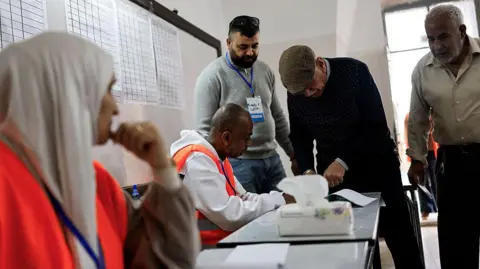
Security arrangements and logistical considerations significantly shaped how these elections proceeded across both the West Bank and Gaza. Palestinian security forces worked to maintain order at polling locations and ensure that voting could take place without disruption. The security situation in the territories created specific operational challenges that election organizers had to address throughout the voting day and in preparation for the electoral process.
The West Bank political landscape continues to feature complex competition between various groups seeking to represent Palestinian interests. The local elections provided a venue for some of these political actors to compete for direct support from voters, even though major national-level factions remained absent from the process. This fragmentation at the local level reflects broader challenges facing Palestinian political development and national unity.
International observers and analysts noted the significance of Palestinian efforts to maintain electoral processes despite substantial obstacles. Democratic participation at the local level, even in limited or contested circumstances, demonstrates commitment to institutional governance and popular engagement in decision-making. These elections, though not universally inclusive, represented important continuity in Palestinian approaches to local administration and community representation.
The absence of Hamas participation in these elections reflected serious disagreements about the legitimacy and timing of the voting process. The organization's decision to boycott stood as a significant political statement regarding its relationship with the Palestinian Authority and its views on current governance arrangements. This continued division between major Palestinian factions complicated efforts to present a unified political voice and raised questions about the representative nature of any electoral outcomes.
Local government structures in Palestinian territories hold responsibility for important community functions including municipal services, public works projects, and local regulation. The representatives elected through these voting processes would take on these substantial responsibilities for their respective communities. The candidates presented themselves with platforms addressing local concerns and promising improved governance at the municipal level.
The conduct of Palestinian elections in the territories occurred within the unique legal and political framework established by Palestinian governance institutions and international arrangements regarding the occupied territories. The election procedures reflected Palestinian efforts to maintain institutional continuity and democratic practice despite the constraints imposed by occupation and internal political division. These processes, though limited in scope and participation, represented ongoing Palestinian engagement with democratic governance mechanisms.
Voter turnout and participation levels varied across different municipalities and locations within the territories. Some communities demonstrated strong engagement with the electoral process, while others showed more limited participation. These variations in turnout reflected differing local circumstances, levels of interest in specific races, and broader attitudes toward the legitimacy and importance of the municipal elections among different Palestinian populations.
The implications of these local elections extend beyond the immediate outcomes in specific municipalities. The results provided indicators about Palestinian political preferences, the relative strength of different political trends, and community priorities regarding local governance. Analysis of voting patterns offered insights into Palestinian public opinion and the organizational capacity of various political groups to mobilize supporters at the grassroots level.
Looking forward, these Palestinian local elections demonstrate the continued importance of municipal governance and local political engagement in Palestinian territories. Despite significant challenges and the absence of major political factions, communities proceeded with selecting representatives to manage local affairs. These elections underscore the persistent Palestinian commitment to democratic processes and local accountability, even amid the larger political disputes that divide Palestinian society and leadership structures across the West Bank and Gaza.
Source: BBC News


