
What Keeps China and Russia Bound Together

Explore the complex geopolitical alliance between China and Russia, analyzing shared interests, power dynamics, and why both nations consider their partnership indispensable despite inherent imbalances.
The China-Russia relationship stands as one of the most consequential geopolitical partnerships of the contemporary world, shaped by historical grievances, mutual strategic interests, and a shared desire to counterbalance Western influence. Despite persistent asymmetries in economic and military capabilities, the two nations have developed a pragmatic alliance that both sides recognize as fundamentally too important to allow to collapse. Understanding what truly binds these two vast nations together requires examining the deeper motivations, historical context, and strategic calculations that underpin their ongoing engagement.
At the foundation of the China-Russia alliance lies a common adversary in the form of Western hegemony, particularly that of the United States and its system of global alliances. Both Beijing and Moscow have experienced what they perceive as interference in their internal affairs, economic sanctions, and attempts to limit their regional influence. This shared sense of grievance against the Western-led international order creates a natural convergence of interests, compelling both nations to maintain a united front against what they view as external pressures and destabilizing interventions in their respective spheres of influence.
The energy sector represents a vital sinew in the fabric of the bilateral partnership, with Russia serving as a crucial supplier of oil and natural gas to China's voracious and growing economy. The construction of major pipeline infrastructure, including the Eastern Siberia-Pacific Ocean pipeline and the Power of Siberia natural gas pipeline, has created deep economic interdependencies that bind the two nations together. These energy arrangements provide Russia with essential revenues while supplying China with the resources necessary to fuel its industrial expansion and economic development.

Beyond economic transactions, the relationship is reinforced by regular diplomatic engagement, military cooperation, and coordinated positions on major international issues. Joint military exercises, arms sales, and intelligence sharing represent tangible expressions of a strategic partnership that extends well beyond simple commercial transactions. Both nations have demonstrated willingness to align their diplomatic stances on contentious global issues, whether in the United Nations Security Council or in multilateral forums, creating a bloc that challenges existing international arrangements.
However, the power imbalance between the two nations cannot be ignored when analyzing this partnership. China's economy has grown exponentially over the past two decades, and it now surpasses Russia's by a factor of several times in terms of gross domestic product. China has also demonstrated superior technological advancement in key sectors and possesses a significantly larger population base. This economic and demographic asymmetry creates an inherent tension within the relationship, as Russia finds itself increasingly dependent on Chinese investments and markets, while China views Russia primarily as a supplier of raw materials and a strategic counterweight to Western influence.
Despite these structural imbalances, both nations have shown remarkable restraint in allowing economic disparities to undermine their political and strategic alliance. This can be attributed to their recognition that mutual strategic interests transcend the material imbalances that might otherwise create friction. Russia values China's support in international forums and the economic opportunities that Chinese investment and trade provide, while China benefits from Russia's substantial military capabilities, its vast natural resources, and its strategic position spanning Europe and Asia.
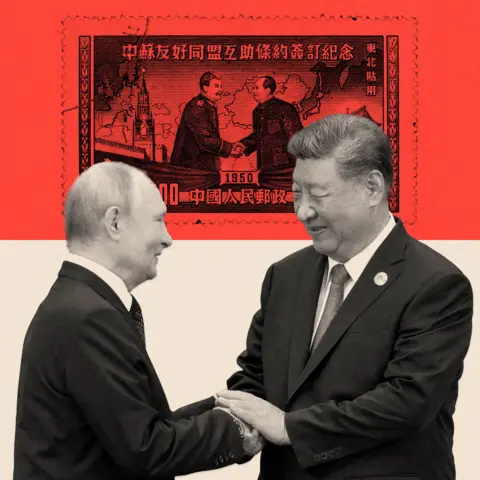
The geopolitical context of recent decades has only strengthened the imperative for maintaining this partnership. As the United States and its Western allies have expanded NATO eastward and increased their military presence in regions adjacent to Russia, Moscow has increasingly turned toward China as a counterbalancing force. Similarly, as China has risen to challenge American dominance in Asia and globally, Russian support—whether diplomatic, military, or strategic—has become increasingly valuable in advancing Beijing's regional and international objectives.
The relationship also finds roots in a pragmatic recognition that the costs of estrangement would far exceed the benefits. Neither nation can afford a confrontation with the other given their respective commitments to regional and global objectives. Russia cannot afford to lose Chinese support while facing Western sanctions and isolation, nor can China risk alienating a nuclear-armed power that controls critical energy supplies and possesses significant military capabilities. This mutual vulnerability creates a powerful incentive structure that keeps both parties committed to maintaining and even deepening their cooperative arrangements.
Trade flows between the two nations have intensified considerably, particularly in recent years as Western sanctions against Russia have pushed Moscow to look eastward for economic partners. Chinese companies have become increasingly prominent in Russian energy projects, infrastructure development, and technology initiatives. While some Russian observers express concern about becoming overly dependent on Chinese capital and markets, these economic entanglements have also created constituencies within both nations that benefit from continued cooperation and have a vested interest in preserving stability within the bilateral relationship.
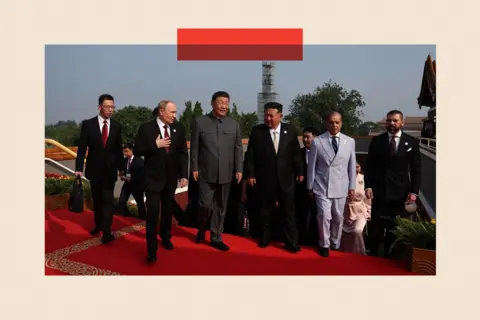
The Shanghai Cooperation Organization, the BRICS alliance, and various other multilateral forums provide institutional frameworks through which China and Russia can coordinate their activities and reinforce their partnership. These platforms allow both nations to work together on issues ranging from regional security to economic development, while also positioning themselves as leaders of an alternative international order that offers different rules and principles from those established by Western-dominated institutions. Through these mechanisms, China and Russia have built a network of relationships and commitments that make their partnership more resilient and less vulnerable to temporary tensions or disagreements.
Looking forward, the sustainability of the China-Russia partnership will likely depend on both nations' continued perception that the benefits of cooperation outweigh the costs of competition. As long as the Western-led international order continues to be perceived as a threat to their interests, and as long as the economic and strategic benefits of cooperation remain substantial, both Beijing and Moscow will have strong incentives to maintain their alliance. The relationship may never achieve the depth of integration seen in Western alliances, characterized by genuine institutional fusion and shared values, but its foundation on clear strategic interests and mutual necessity makes it remarkably durable despite its inherent asymmetries.
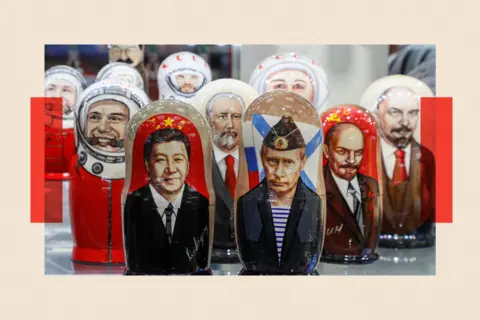
Ultimately, what holds China and Russia together is not affection or ideological alignment, but rather a cold calculation of national interests and a realistic assessment of the international environment. Both nations recognize that they face a common challenge in the form of Western dominance and are stronger together than apart in confronting this challenge. As long as this fundamental strategic reality remains unchanged, the partnership will endure, survive periodic tensions, and likely deepen in scope and intensity. The alliance, grounded in mutual necessity rather than mutual love, may prove more durable than relationships based on warmer sentiments alone.
Source: BBC News


