
Yellowstone's Volcanic Secrets Unveiled: The Farallon Plate's Untold Story

Discover how the vanishing Farallon plate has reshaped North America's landscape and powered the iconic Yellowstone hotspot, challenging the mantle plume theory.
North America's geological landscape wouldn't be the same without the influential Farallon plate, a tectonic plate that has largely vanished beneath the continent over time. This once-powerful plate played a crucial role in shaping the West Coast, helping to build California and powering the volcanoes of the Cascades. Now, a new scientific paper suggests that the Farallon plate's disappearing act has also had a profound impact on the Yellowstone hotspot, one of North America's most distinctive natural phenomena.
The traditional explanation for the Yellowstone hotspot has been the mantle plume theory, which proposes that a blob of hot, molten rock from deep within the Earth's interior is driving the volcanic activity. However, the new research challenges this long-held belief, arguing that the stresses and changes created by the Farallon plate's vanishing act are the true driving force behind Yellowstone's periodic ash-blanketing eruptions.
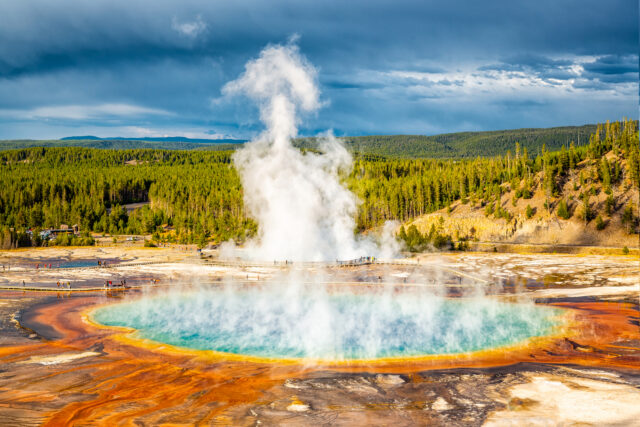
Geologic hot spots are areas around the world where deep-seated material from the Earth's interior finds its way to the surface, often far from the edges of tectonic plates. In many cases, the heat that powers these hot spots is attributed to mantle plumes – blobs of hot, molten rock that convection drives towards the surface of the mantle. As the plates drift across these stationary plumes, they create a chain of progressively older islands.
But the new paper suggests that the Yellowstone hotspot may not fit this classic model. Instead, the researchers argue that the disappearance of the Farallon plate, which once dominated the western edge of North America, has created a unique set of stresses and pathways that have allowed molten rock to reach the surface and fuel the Yellowstone volcanic system.
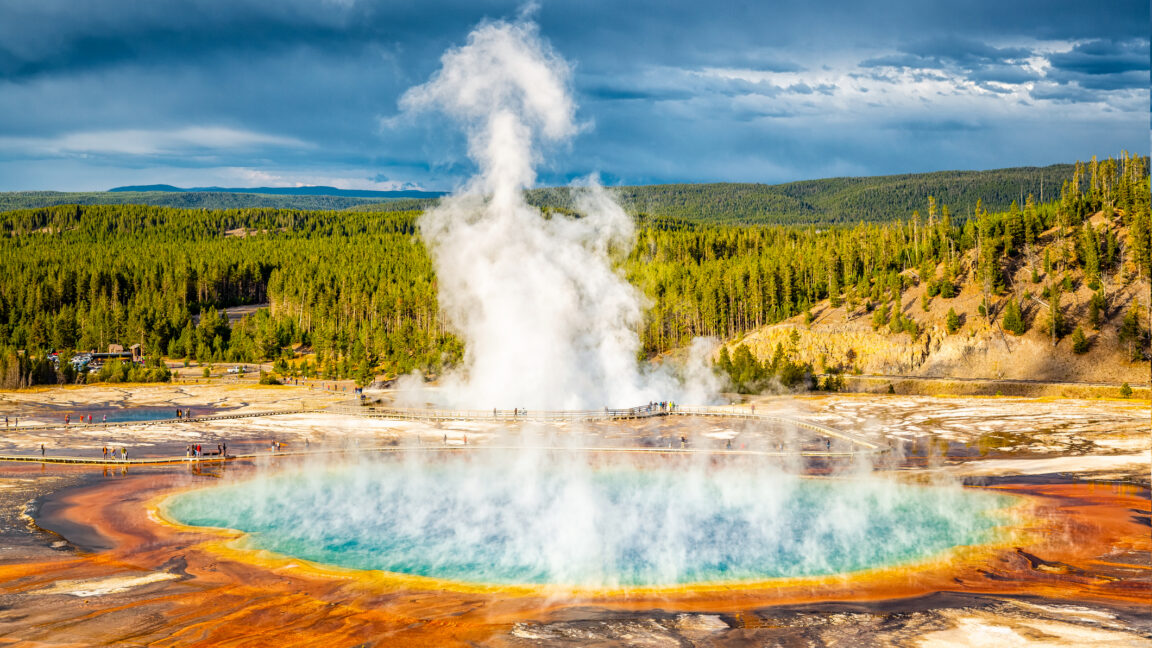
The Farallon plate, which has largely vanished underneath North America over geological time, played a pivotal role in the development of the West Coast. As the plate slammed into and subducted under the continent, it helped build features like the Cascades and much of California itself. But the new research suggests that the Farallon plate's disappearance has also had a significant impact on the Yellowstone hotspot, located far inland from the coasts.
The paper argues that the stresses and changes created by the Farallon plate's vanishing act have opened up pathways for molten rock to reach the surface, powering the periodic, ash-blanketing eruptions of the Yellowstone supervolcano. This challenges the long-standing mantle plume theory and offers a new, plate tectonics-based explanation for one of North America's most dramatic geological features.

The implications of this new research could have far-reaching consequences for our understanding of Yellowstone and other geologic hot spots around the world. By shifting the focus away from the mantle plume theory and towards the role of plate tectonics, the study opens up new avenues of exploration and could lead to a more comprehensive understanding of the Earth's dynamic geological processes.
As the scientific community continues to debate and explore the origins of the Yellowstone hotspot, this latest paper serves as a reminder that even our most established geological theories are subject to revision in the face of new evidence and innovative thinking. The story of Yellowstone's volcanic past may still have more surprises in store as we delve deeper into the complex interplay between the Earth's interior and surface.
Source: Ars Technica


