
Legendary Choughs Return to Tintagel Castle

Red-beaked choughs have made a triumphant return to Tintagel Castle in Cornwall after vanishing for decades, marking a significant conservation milestone.
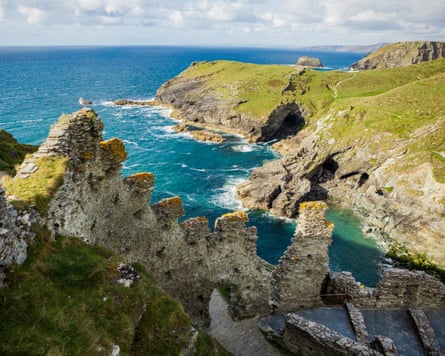
The rugged coastal landscape surrounding Tintagel Castle in north Cornwall has witnessed a remarkable ecological revival, as distinctive red-beaked choughs have reappeared along its dramatic clifftops after a prolonged absence spanning several decades. This momentous return represents not merely a sighting of an individual bird, but rather the successful reestablishment of a species that had virtually disappeared from the region, offering hope to conservationists and wildlife enthusiasts who have long worked toward this goal.
The chough holds deep cultural and historical significance within Cornish tradition and legend, particularly in connection with the mythical King Arthur. According to local folklore and medieval narratives, King Arthur was said to have undergone a mystical transformation into a chough upon his death, with the bird's distinctive crimson feet and beak symbolizing the bloodshed of his final battle and his noble sacrifice. This legendary association has made the chough an iconic symbol of Cornwall's rich mythological heritage and cultural identity.
English Heritage, the custodian organization responsible for managing and preserving Tintagel Castle, has officially confirmed the return of these charismatic corvids to the region. Working in close collaboration with local ornithologists and bird conservation experts, English Heritage has documented the presence of choughs frequenting the jagged cliff formations that characterize Tintagel's dramatic landscape. The confirmation comes after years of dedicated monitoring and conservation efforts aimed at creating suitable habitat conditions for these specialized birds.

Choughs are remarkable and distinctive members of the corvid family, a group that includes crows, ravens, and jays. What sets choughs apart from their corvid relatives is their striking appearance, characterized by glossy black plumage contrasted with bright red beaks and equally red feet and eye-rings. These physical characteristics make them unmistakable once spotted in their natural habitat, though their rarity in recent decades made sightings exceptionally uncommon. The red-billed chough, scientifically known as Pyrrhocorax pyrrhocorax, has historically inhabited rocky coastal and mountainous regions across southern Europe, northern Africa, and Asia.
The disappearance of choughs from Cornwall represents a broader conservation concern that affected numerous regions throughout Britain and Europe during the twentieth century. By the 1950s, these birds had virtually vanished from British skies entirely, with their last stronghold in the United Kingdom located in Wales. The decline of chough populations resulted from multiple interconnected factors including habitat loss, persecution by farmers who mistakenly believed the birds posed threats to livestock, changes in agricultural practices, and the widespread use of pesticides that reduced their insect food sources. The transformation of open grasslands and cliff-top habitats into managed agricultural areas or abandoned mine sites fundamentally altered the ecosystem that choughs depended upon for survival.
The successful reintroduction of choughs to Tintagel and surrounding areas represents the culmination of dedicated conservation work spanning multiple decades and involving numerous organizations and individuals. Conservation programs across southern Europe and the United Kingdom have focused on protecting existing chough populations while simultaneously creating conditions that would make habitat restoration possible. These efforts have included purchasing and managing land specifically to provide suitable foraging habitat, implementing protective legislation, and conducting extensive research into chough behavior and habitat requirements. The return of choughs to Cornwall demonstrates that intensive conservation intervention, when properly planned and executed, can reverse even severe population declines.
For English Heritage and the local communities around Tintagel, the return of choughs carries profound significance beyond mere ecological restoration. The birds serve as a powerful symbol of landscape recovery and the possibility of reconnecting modern Cornwall with its natural heritage and legendary history. Visitors to Tintagel Castle can now potentially experience the same wildlife that inspired the medieval legends of King Arthur, creating a tangible link between the mythological past and the ecological present. The presence of choughs at Tintagel also enhances the castle's appeal as a destination for birdwatchers and wildlife enthusiasts from across Britain and internationally.
The local ornithological community has played an essential role in confirming and documenting the chough sightings at Tintagel and the surrounding Cornish coast. These dedicated bird specialists have conducted systematic surveys, recorded observations, and shared their findings with conservation organizations to build a comprehensive picture of chough distribution and population trends. Their expertise and passion for bird conservation have been invaluable in distinguishing between vagrant individual birds and the establishment of a breeding or resident population, a crucial distinction that indicates whether the recolonization is truly sustainable. The collaborative relationship between local birdwatchers, formal ornithological organizations, and heritage managers exemplifies how diverse stakeholders can work together effectively toward conservation goals.
The ecological significance of chough habitat restoration extends beyond the survival of a single species. Choughs occupy a specific ecological niche within their environment, and their presence indicates broader ecosystem health and the successful management of coastal grassland and cliff habitats. By creating conditions suitable for choughs, conservation programs simultaneously benefit numerous other species that share similar habitat requirements, including other birds, insects, plants, and small mammals. The restoration of chough habitat at Tintagel therefore represents an investment in the overall biodiversity and ecological resilience of the Cornish coastline.
The return of choughs to Tintagel marks a significant milestone in British conservation history and offers important lessons for future restoration efforts. The success achieved at Tintagel suggests that with sufficient commitment, resources, and scientific knowledge, communities can restore landscapes that have been severely degraded and bring back species that have disappeared from their historical ranges. This achievement provides optimism for ongoing conservation efforts targeting other threatened species and habitats throughout Britain and Europe. As climate change and habitat loss continue to pose challenges to wildlife populations globally, successful cases like the chough recolonization of Tintagel demonstrate that human intervention, when guided by scientific understanding and conservation principles, can contribute to positive environmental outcomes and the restoration of natural heritage for future generations.
Source: The Guardian


