
Pocock Warns CGT Changes May Drive Tech Startups Abroad

Independent senator raises concerns about capital gains tax reform pushing tech investment offshore, while PM dismisses AI meme protest from startup founders.
Prime Minister Anthony Albanese has responded with humor to a creative AI-generated meme campaign orchestrated by startup founders protesting proposed capital gains tax changes, expressing gratitude for what he described as "very flattering" digitally altered images depicting him operating within their businesses. The lighthearted exchange underscores the growing tension between the government's fiscal policies and Australia's burgeoning technology sector.
However, independent politicians who represent key Australian startup hubs have sounded the alarm about the potential consequences of the proposed capital gains tax increase. These concerned legislators argue that substantial tax reform could incentivize innovative companies and ambitious tech enterprises to relocate their operations overseas, where they might pursue more favorable financial opportunities and avoid heightened tax burdens.

David Pocock, the prominent independent senator, has emerged as one of the most vocal critics of the government's tax proposal, warning that the budget reforms could have serious ramifications for Australia's competitive position in the global technology sector. His concerns reflect broader anxieties within the entrepreneurial community that excessive taxation could diminish the attractiveness of maintaining headquarters and operations within Australia.
The tension between the Albanese government's revenue-raising objectives and the tech industry's objections has created an unexpected political battleground. Startup founders have deployed creative protest tactics, including the generation of AI-powered satirical images, to draw attention to their concerns and bring media focus to an issue they view as threatening to Australia's economic future.
The proposed capital gains tax increase represents part of the government's broader budget strategy to generate additional revenue for public services and infrastructure investment. However, the startup community has consistently maintained that such measures could unintentionally harm Australia's ability to compete with international tech hubs in attracting and retaining investment capital.
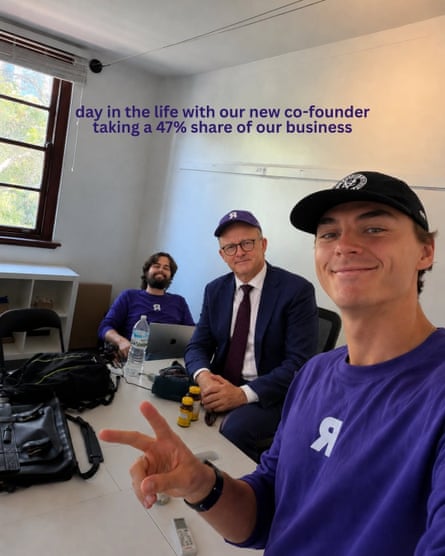
The meme campaign, while humorous on the surface, reflects genuine anxieties about Australia's regulatory and tax environment. Startup founders have long argued that tech investment decisions are heavily influenced by tax considerations, and that Australia risks losing talented entrepreneurs and venture capital to more tax-friendly jurisdictions such as Singapore, the United States, or the United Kingdom.
Independent politicians representing major startup hotspots including Sydney's inner west and Melbourne's tech corridor have articulated detailed concerns about the tax proposal's potential economic consequences. They warn that an elevated capital gains tax regime could discourage the formation of new ventures and discourage existing companies from scaling their operations domestically.
The Albanese government has maintained that the tax changes are necessary and fair, emphasizing that they represent a measured approach to ensuring the nation's wealthiest citizens and most profitable companies contribute appropriately to public finances. Government representatives have suggested that the startup community's concerns are overstated and that Australian innovation will continue to flourish regardless of modest tax adjustments.

Pocock's warnings have gained particular traction because of his credibility as an independent voice not bound by partisan obligations. His emphasis on offshore investment risks and potential brain drain has resonated with many in the technology sector who fear that policy decisions made without adequate consultation could have unintended consequences for Australia's long-term economic competitiveness.
The AI meme campaign itself represents an interesting intersection of modern protest tactics and the technology industry's self-awareness. By using artificial intelligence to create satirical images, startup founders demonstrated both their technical capabilities and their willingness to engage in unconventional advocacy methods to draw political attention to issues affecting their industry.
Prime Minister Albanese's decision to respond with humor rather than defensiveness suggests the government may be seeking to de-escalate tensions with the technology sector, even as it proceeds with the tax reforms. His characterization of the images as "very flattering" demonstrates a light touch approach to what could have become a more acrimonious political dispute.
Looking ahead, the debate over capital gains taxation and its impact on startup ecosystems appears likely to intensify as the government moves toward legislative implementation of its budget measures. Industry groups, venture capital firms, and independent politicians will almost certainly continue advocating for modifications or exemptions to protect Australia's competitive advantage in attracting technology investment.
The fundamental disagreement between the government and the startup community reflects broader philosophical differences about taxation, wealth distribution, and economic policy priorities. While the government emphasizes revenue requirements for public services, the tech sector prioritizes competitive positioning and investor confidence as essential drivers of long-term prosperity.
As this political drama continues to unfold, the outcomes of these policy debates will likely have lasting implications for Australia's position as a global technology hub and innovation center, making the seemingly lighthearted meme campaign a window into genuinely consequential questions about economic priorities and fiscal responsibility.


