
US and Nigeria Kill ISIS Second-in-Command

President Trump announces elimination of Islamic State leader Abu-Bilal al-Minuki in joint military operation with Nigerian forces.
In a significant development in the ongoing fight against extremist organizations, President Donald Trump announced Friday that US and Nigerian forces have successfully eliminated a top leader of the Islamic State militant group. The targeted individual, identified as Abu-Bilal al-Minuki, held a prominent position within the terrorist organization's hierarchical structure, serving as the group's second-in-command at the global level.
Trump took to his Truth Social platform to announce the successful completion of what he characterized as an exceptionally challenging military operation. "Tonight, at my direction, brave American forces and the Armed Forces of Nigeria flawlessly executed a meticulously planned and very complex mission to eliminate the most active terrorist in the world from the battlefield," the president stated in his official announcement. The language employed in his statement emphasized both the precision and difficulty inherent in conducting such a high-stakes counter-terrorism operation.
The Islamic State terrorist group, also known as ISIS or ISIL, has long represented one of the most significant security challenges facing nations across multiple continents. The organization has been responsible for numerous attacks, kidnappings, and humanitarian crises throughout Africa, the Middle East, and beyond. The death of al-Minuki represents a major blow to the group's organizational structure and operational capacity, particularly given his elevated position within the terrorist hierarchy.
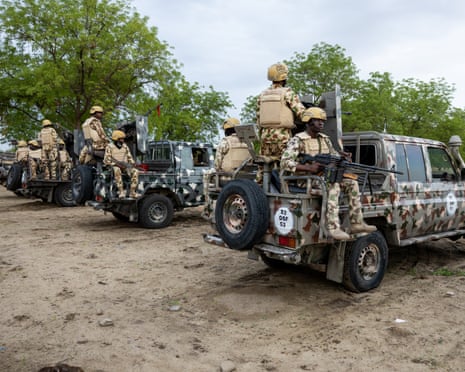
The joint operation between American and Nigerian military forces underscores the increasingly collaborative nature of international counter-terrorism efforts in combating distributed terrorist networks. Nigeria, which has faced sustained pressure from various extremist factions including the Islamic State's West Africa affiliate, has emerged as a critical partner in regional security initiatives. The coordination between US military capabilities and Nigerian ground forces demonstrates how nations with shared security interests can combine resources and intelligence to achieve significant operational objectives.
Trump characterized al-Minuki as "the most active terrorist in the world," a designation that speaks to the group's assessment of his operational role within the broader Islamic State apparatus. While the full extent of his involvement in planning and coordinating terrorist attacks may not be immediately disclosed due to ongoing intelligence operations, the significance of his position suggests he was involved in directing numerous activities across the organization's various regional branches. His elimination removes a critical operational node from the terrorist organization's command structure.
The military mission complexity highlighted by the president's statement reflects the inherent challenges in locating and neutralizing high-value targets within terrorist organizations. Such operations typically require extensive intelligence gathering, careful planning to minimize civilian casualties, coordination across multiple military branches and international partners, and precise execution in potentially hostile environments. The fact that Trump specifically noted the mission's complexity suggests it involved sophisticated tactical planning and potentially significant logistical coordination.
The Islamic State has long maintained a significant presence in West Africa, where it has conducted operations through various affiliated cells and regional franchises. Nigeria, as the most populous nation in Africa and a strategic hub in the region, has been particularly affected by extremist violence. The country has faced sustained pressure not only from the Islamic State but also from other militant organizations, creating a complex security environment that demands continuous international engagement and support.
Over the past several years, the United States has significantly increased its military presence and advisory roles throughout West Africa, working to strengthen the capabilities of regional militaries in their fight against extremist organizations. This assistance has included training programs, intelligence sharing, equipment provision, and in some cases, direct participation in military operations. The successful elimination of al-Minuki reflects the fruits of these long-term engagement strategies and investments in regional security partnerships.
The operation's success also highlights the importance of human intelligence and surveillance capabilities in identifying the locations and movements of terrorist leaders. Modern counter-terrorism operations increasingly rely on a combination of signals intelligence, human intelligence networks, drone surveillance, and real-time data analysis to track high-value targets. The ability to maintain operational security while conducting such surveillance requires significant technological sophistication and coordination among intelligence agencies.
As the Islamic State has faced territorial losses in Iraq and Syria over the past decade, the organization has increasingly focused on expanding its reach in Africa, particularly in the Sahel region and West Africa. This strategic pivot has made the continent an increasingly important battleground in the broader global counter-terrorism campaign. The elimination of senior leaders like al-Minuki disrupts the organization's ability to coordinate attacks and maintain cohesion across its dispersed operational networks.
The announcement of this successful operation comes at a time of continued international focus on terrorism prevention strategies and the effectiveness of military interventions in combating extremist threats. While significant progress has been made in degrading the Islamic State's capabilities, security analysts note that the organization has demonstrated remarkable resilience and adaptability in the face of sustained military pressure. The group continues to recruit new members, establish new cells in areas with weak governance, and conduct attacks despite significant losses in leadership and personnel.
Trump's statement on Truth Social represents an official validation of intelligence that had likely been gathered and analyzed by multiple government agencies over an extended period. The decision to publicize the operation's success suggests confidence in the intelligence and a strategic interest in demonstrating the effectiveness of current counter-terrorism approaches. Public announcements of such operations serve multiple purposes, including boosting public confidence in security measures, signaling resolve to allies, and potentially degrading enemy morale and recruitment efforts.
The collaboration between US and Nigerian forces in eliminating al-Minuki exemplifies how modern security challenges require sophisticated multinational responses. Both nations share interests in regional stability, preventing the expansion of extremist organizations, and protecting their respective populations from terrorist threats. Such partnerships are likely to become increasingly important as terrorist organizations continue to adapt their strategies and shift their operational focus across different geographic regions.
Looking forward, the elimination of the Islamic State's second-in-command will likely prompt organizational reshuffling within the terrorist group as leadership positions are reassigned and succession questions are addressed. Intelligence agencies will continue monitoring for signs of internal conflict, changes in operational tempo, and shifts in strategic focus that might result from the loss of this significant leader. The long-term impact of this operation will depend on whether similar sustained pressure can be maintained against other members of the organization's leadership structure and whether efforts to address the underlying conditions that fuel recruitment to extremist organizations can be sustained over time.


