
Waste Industry Turns to Robots as Staff Shortage Deepens

Humanoid robots are revolutionizing waste sorting operations as garbage collection companies struggle with severe staffing challenges. Discover how automation is reshaping the industry.
The waste management industry is experiencing a significant transformation as companies increasingly turn to humanoid robots to address a mounting staffing crisis. With recruitment and retention becoming increasingly difficult, waste firms are investing heavily in robotic automation technology to maintain operational efficiency and meet growing demand for waste processing services across the globe.
This shift toward robotic waste sorting represents a major evolution in how municipalities and private waste companies manage the billions of tons of refuse generated annually. The challenge of finding reliable workers for physically demanding and often unpleasant tasks has pushed industry leaders to explore technological solutions that can work continuously without fatigue or safety concerns. These sophisticated machines are designed to handle the complex task of sorting recyclable materials from general waste with remarkable precision.
The automation of waste management has become increasingly urgent as labor shortages persist across developed nations. Companies report difficulty in recruiting workers willing to undertake the repetitive and physically taxing work involved in waste sorting facilities. The combination of low wages, challenging working conditions, and the availability of alternative employment opportunities has created a perfect storm that threatens operational capacity at numerous facilities.
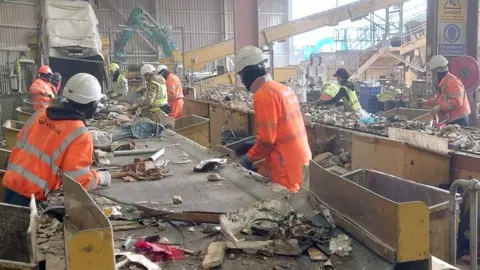
Leading waste management companies have begun deploying advanced sorting robots equipped with artificial intelligence and sophisticated computer vision systems. These machines can identify and separate different types of materials—plastics, metals, glass, and paper—far more efficiently than human workers in many cases. The robots work tirelessly on 24-hour schedules, dramatically increasing the throughput of waste processing facilities while reducing errors in the sorting process.
The investment in robotic technology comes as the waste industry faces unprecedented pressure to improve recycling rates and meet increasingly stringent environmental regulations. Governments worldwide are implementing stricter waste management policies that require higher percentages of materials to be diverted from landfills. Without adequate staffing, achieving these ambitious recycling targets would be nearly impossible, making robot automation in waste not just economically sensible but environmentally necessary.
Several major waste management corporations have already reported significant gains in operational efficiency after deploying humanoid robots in their sorting facilities. These companies highlight improvements in recycling accuracy, reduced contamination rates in the recycled material streams, and decreased workplace injuries associated with manual sorting tasks. The financial benefits of improved output and safety records are helping to justify the substantial capital investments required for robotic systems.
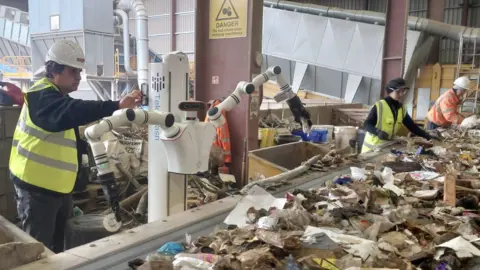
The integration of robots into waste facilities presents both opportunities and challenges for the industry workforce. While some employment positions are being eliminated through automation, new roles are emerging in robot maintenance, programming, and facility management. However, labor unions and worker advocates have expressed concerns about the long-term employment implications of widespread waste industry robotics, particularly for workers without access to retraining programs.
Training and workforce transition programs are becoming increasingly important as waste companies modernize their operations. Some forward-thinking employers are investing in upskilling initiatives to help existing staff transition into technical roles supporting automated systems. These programs aim to ease the transition for workers whose positions are becoming obsolete due to automation, ensuring a smoother shift toward a more technology-driven operational model.
The technological capabilities of modern sorting robots continue to advance at a rapid pace. Newer generations feature improved sensors, faster processing speeds, and enhanced machine learning algorithms that allow them to adapt to variations in waste composition. These improvements make the systems increasingly cost-effective and suitable for deployment across a wider range of facilities with different operational requirements and waste streams.

Environmental benefits of robotic waste sorting extend beyond simple efficiency improvements. Higher accuracy in material separation leads to better quality recycled materials, which can be reused more effectively and command better market prices. This improved material quality helps create a more viable economic model for recycling operations, reducing reliance on government subsidies and making the industry more sustainable long-term.
The waste management sector's embrace of automation reflects broader trends in manufacturing and logistics industries, where robots are increasingly handling tasks once performed exclusively by humans. As technology costs continue to decline and capabilities improve, the economic case for deploying robotic systems becomes more compelling for facility operators. Many industry analysts predict that automated waste processing will become the standard rather than the exception within the next decade.
Global supply chains and international waste trade are also influencing the pace of automation adoption. As countries tighten regulations around imported waste and require higher quality sorted materials, the ability to process waste more accurately and consistently becomes crucial. Robots provide a standardized level of sorting quality that can help facilities meet these increasingly demanding international standards.
The financial investment required for implementing robotic waste solutions remains substantial, but payback periods are typically estimated between two and five years depending on facility size and operational parameters. Government incentives and grants for waste management modernization in some jurisdictions are helping to offset these costs and accelerate adoption rates. As more facilities report positive results, the competitive pressure to adopt similar technologies increases across the industry.
Looking forward, the waste management industry is likely to see continued technological innovation in sorting robots and automated systems. Developments in areas such as soft robotics, expanded sensor capabilities, and artificial intelligence integration promise even more sophisticated sorting solutions. The combination of workforce shortages and environmental necessity ensures that waste sector automation will remain a priority for investment and development in coming years, fundamentally reshaping how societies manage the materials they discard.
Source: BBC News


