
GOP Moves to Eliminate Office Won by Exoneree

Louisiana Republicans eliminate elected clerk position days before Democratic exoneree Calvin Duncan was set to take office in New Orleans criminal court.
In a significant political maneuver, Louisiana Republicans have moved to eliminate an elected position that was overwhelmingly won by Calvin Duncan, a Democratic candidate and exoneree who was scheduled to assume office as the clerk of New Orleans' criminal district courthouse. The timing of this legislative action has raised questions about the future of Duncan's position and his ability to serve the constituents who voted for him.
The move by Republican lawmakers came just days before Duncan was set to officially take office on Monday, creating uncertainty around the viability of the elected post. Despite the legislative challenge, a temporary restraining order was granted that allowed Duncan to proceed with taking office as scheduled, providing him with at least temporary protection to assume his duties. However, legal experts and political observers have expressed concerns about the durability of his tenure and what may lie ahead.
Duncan's path to this position represents a remarkable personal journey. As an exoneree who had previously spent years in the criminal justice system before being exonerated, his election as criminal district courthouse clerk symbolized a significant endorsement from New Orleans voters. The overwhelming margin of his victory suggested strong community support for his candidacy and a desire to bring his unique perspective to the administrative operations of the criminal court system.
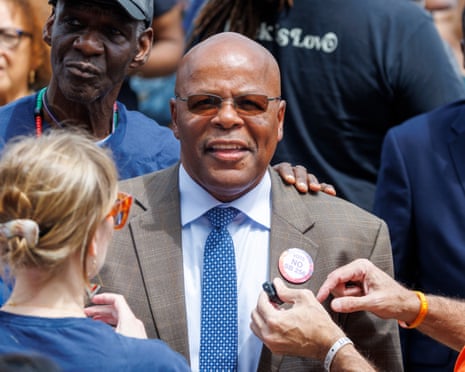
The circumstances surrounding the elimination of this elected office reflect broader tensions in Louisiana politics. The swift action by Republican legislators, occurring mere days before Duncan's scheduled swearing-in, has been interpreted by political analysts as a strategic move to undermine the will of voters in New Orleans. The legal and procedural questions raised by this situation have drawn attention from civil rights advocates and political observers nationwide who view it as a test case for democratic processes.
The temporary restraining order that allowed Duncan to take office represents a crucial legal victory, at least in the immediate term. This court intervention prevented what could have been an immediate nullification of the democratic process that resulted in Duncan's election. The order demonstrates the complexity of the legal landscape surrounding this political dispute, with judges being forced to weigh questions of legislative authority against the rights of voters and elected officials.
Calvin Duncan's background as an exoneree adds another layer of significance to this controversy. Having experienced wrongful conviction and subsequent exoneration, Duncan's election was seen by many as a powerful statement about redemption, second chances, and the possibility of meaningful participation in civic life. His candidacy had energized Democratic voters in New Orleans and represented a departure from traditional courthouse administrative positions.
The uncertainty surrounding the duration of Duncan's tenure creates a complex situation for all parties involved. While the temporary restraining order provides immediate relief, it does not necessarily resolve the underlying dispute about whether the elected position should continue to exist. Legal challenges are likely to proceed through the court system, potentially resulting in a lengthy battle over the legitimacy of the position and Duncan's right to hold it.
This situation also raises important questions about the proper role of state legislature in determining the structure of local government. While legislatures traditionally have broad authority to reorganize government offices and eliminate positions, critics argue that doing so after an election has taken place—and specifically targeting an elected official—crosses ethical and constitutional lines. The principle of legislative authority, when wielded in this manner, has sparked debate about whether there are or should be limits on such power.
The implications of this case extend beyond New Orleans and Louisiana politics. Democratic and Republican operatives across the country are watching closely to see how courts will ultimately rule on the elimination of elected positions and whether such action can be taken retroactively to undo election results. The outcome could set important precedents for how states and localities handle disputes between legislative bodies and elected officials.
Calvin Duncan's supporters have rallied behind him, viewing his situation as emblematic of a broader struggle for democratic representation and equal treatment within the political system. The overwhelming support he received from New Orleans voters suggests that the community was eager for his particular expertise and perspective in managing the criminal courthouse operations. His election was not a close call, but rather represented a clear mandate from the electorate.
Moving forward, the court system will play a crucial role in determining whether the Republican-led effort to eliminate Duncan's position will ultimately succeed. The legal arguments on both sides are complex, involving questions of constitutional authority, legislative power, and the rights of voters. The temporary restraining order serves as a holding action while these deeper constitutional questions are resolved.
The broader context of this dispute includes ongoing political polarization in Louisiana and across the nation, with control of offices and positions frequently becoming flashpoints between Democratic and Republican interests. The question of whether an elected office should be eliminated specifically to prevent a Democratic exoneree from serving represents an extreme manifestation of these partisan tensions. As the legal process unfolds, this case will likely become a defining moment in discussions about democratic norms and the proper bounds of legislative authority.
The outcome of Calvin Duncan's tenure as New Orleans criminal district courthouse clerk remains uncertain, but his ability to initially assume office represents an important victory for the principle that election results should be honored and respected. Whether he will ultimately be able to serve out a full term depends on how courts interpret the complex legal and constitutional questions raised by the Republican effort to eliminate his position. For now, the temporary restraining order has preserved his right to serve, providing hope to those who believe that democratic processes should be protected and respected.


